
The hot steel plate hisses the moment the beef touches down. The chef stands exactly an arm’s length away, the knife turning quickly in hand, heat rising to your face along with the scent of butter and garlic. In most restaurants, the kitchen sits behind a door. Here, the kitchen is the stage, and you are in the front row.
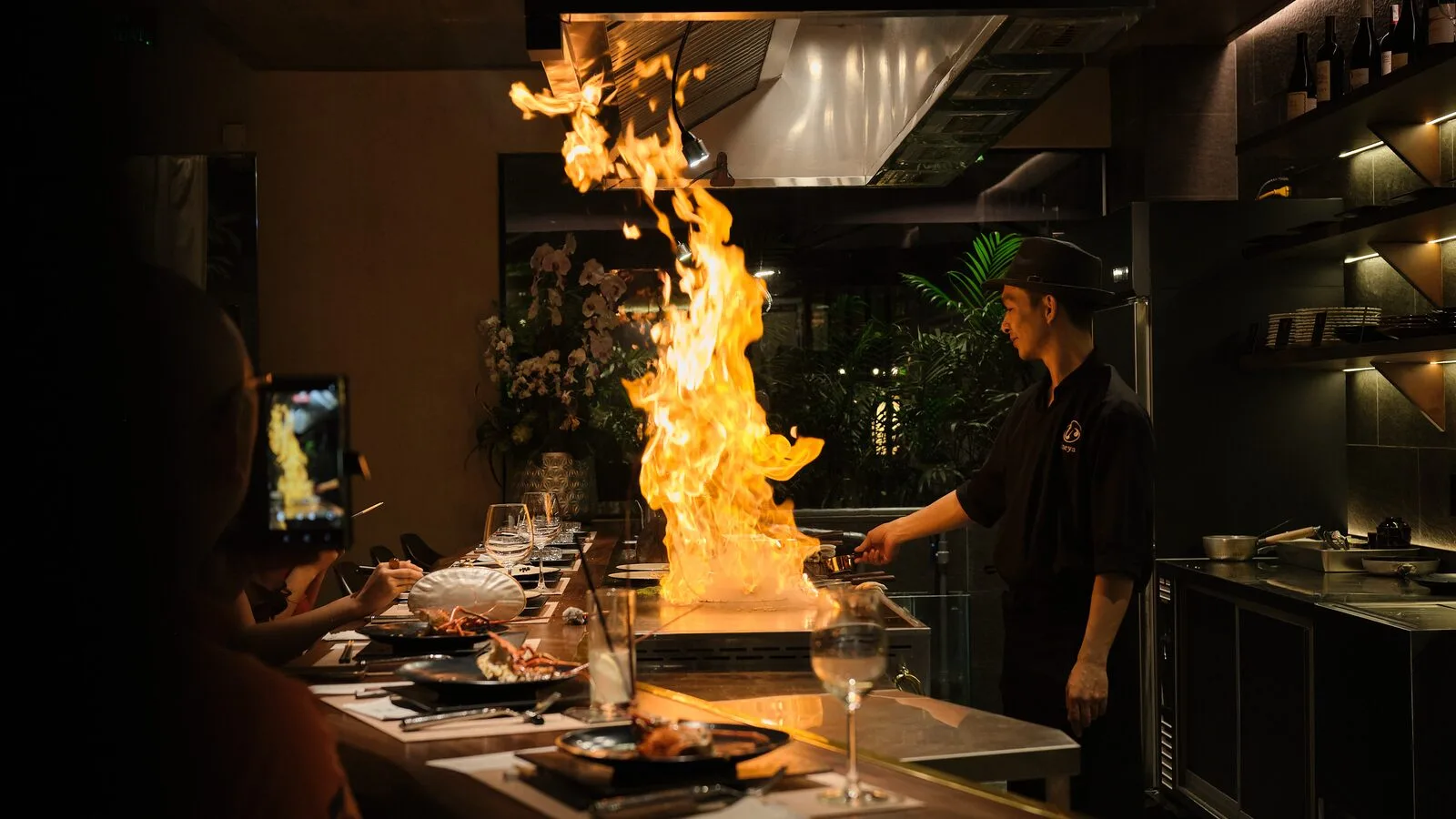
Teppanyaki combines teppan, meaning steel plate, and yaki, meaning grilled. It sounds simple, but that very layout creates a very particular kind of restaurant, one where the cooking and the eating happen in the same place, at the same time. In Saigon, you can experience it at Roll & Teppan Ineya in the Thao Dien area.
One steel plate, a completely different way of cooking
Unlike a grill with gaps that let the flame lick directly at the meat, the teppan is a solid, flat surface heated evenly. The food makes full contact with the surface, so the side that touches cooks quickly and forms a golden crust, while juices and fat do not drip into the fire but pool on the steel instead.
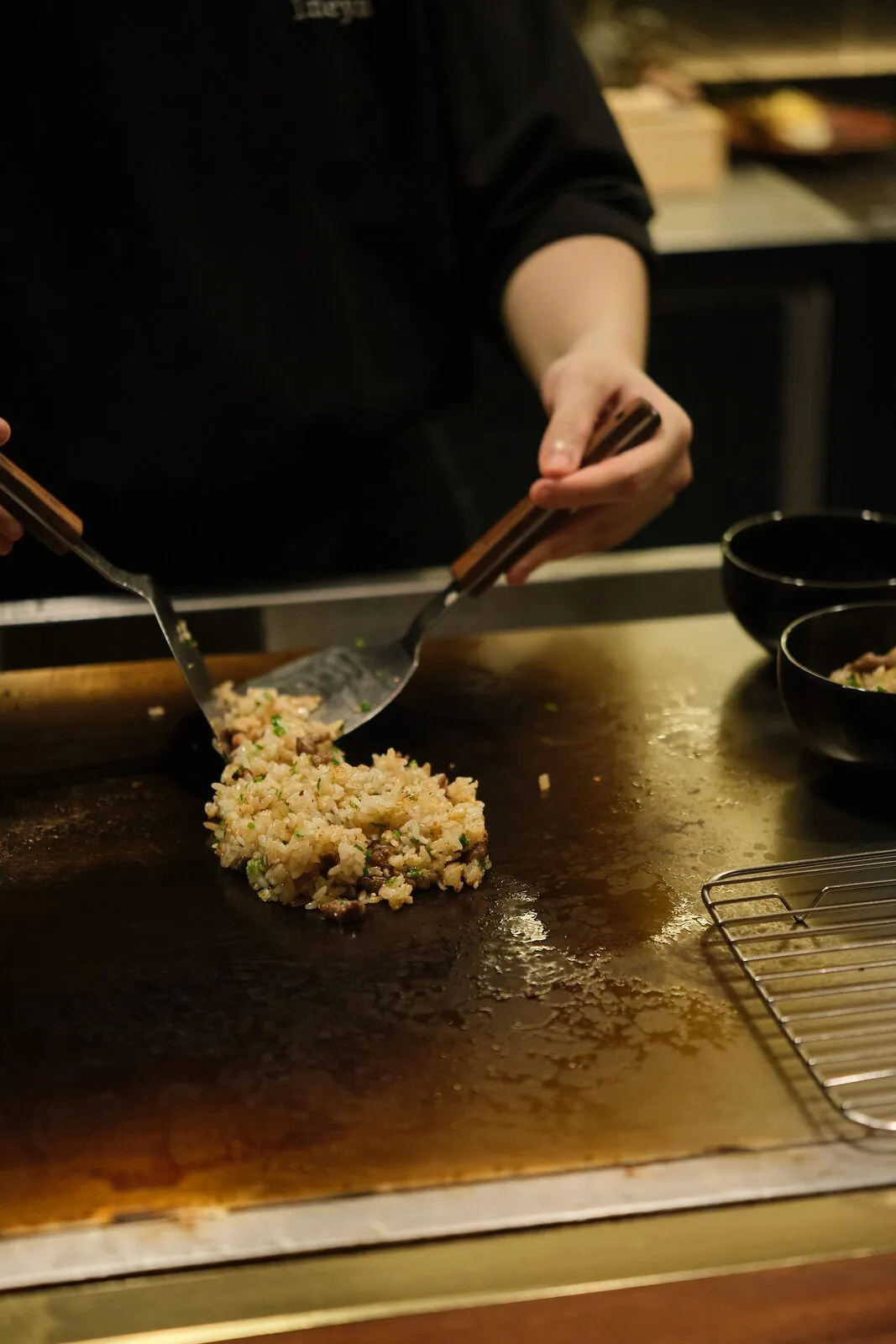
That single detail changes everything. The released juices are put to use by the chef, to sear vegetables, to glaze a piece of meat again, or to build the base for the fried rice at the end of the meal. Nothing is thrown away, and the flavour gathers steadily along the arc of the meal.
On a hot steel plate, what falls away from one dish becomes the flavour base for the next.
That is also why teppanyaki calls for a chef skilled at orchestration. At any moment the steel might hold three or four things cooking at different speeds, each needing to leave the surface at exactly its own moment.
The stages a teppanyaki meal usually moves through
Every restaurant builds its own version, but a teppanyaki course tends to follow a familiar rhythm:
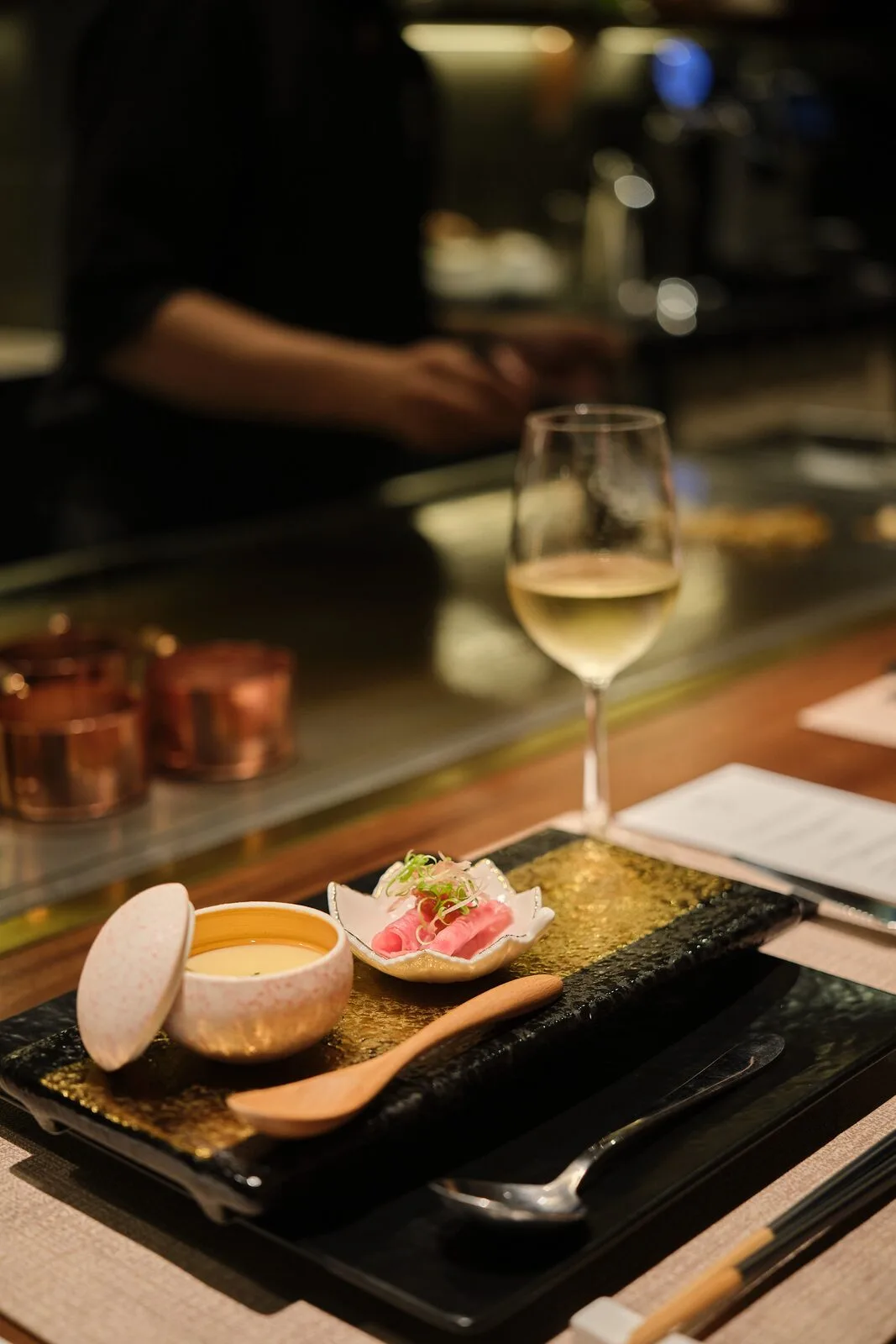
- A light starter. A cold dish or a small salad to open the palate, usually served before the grill heats up.
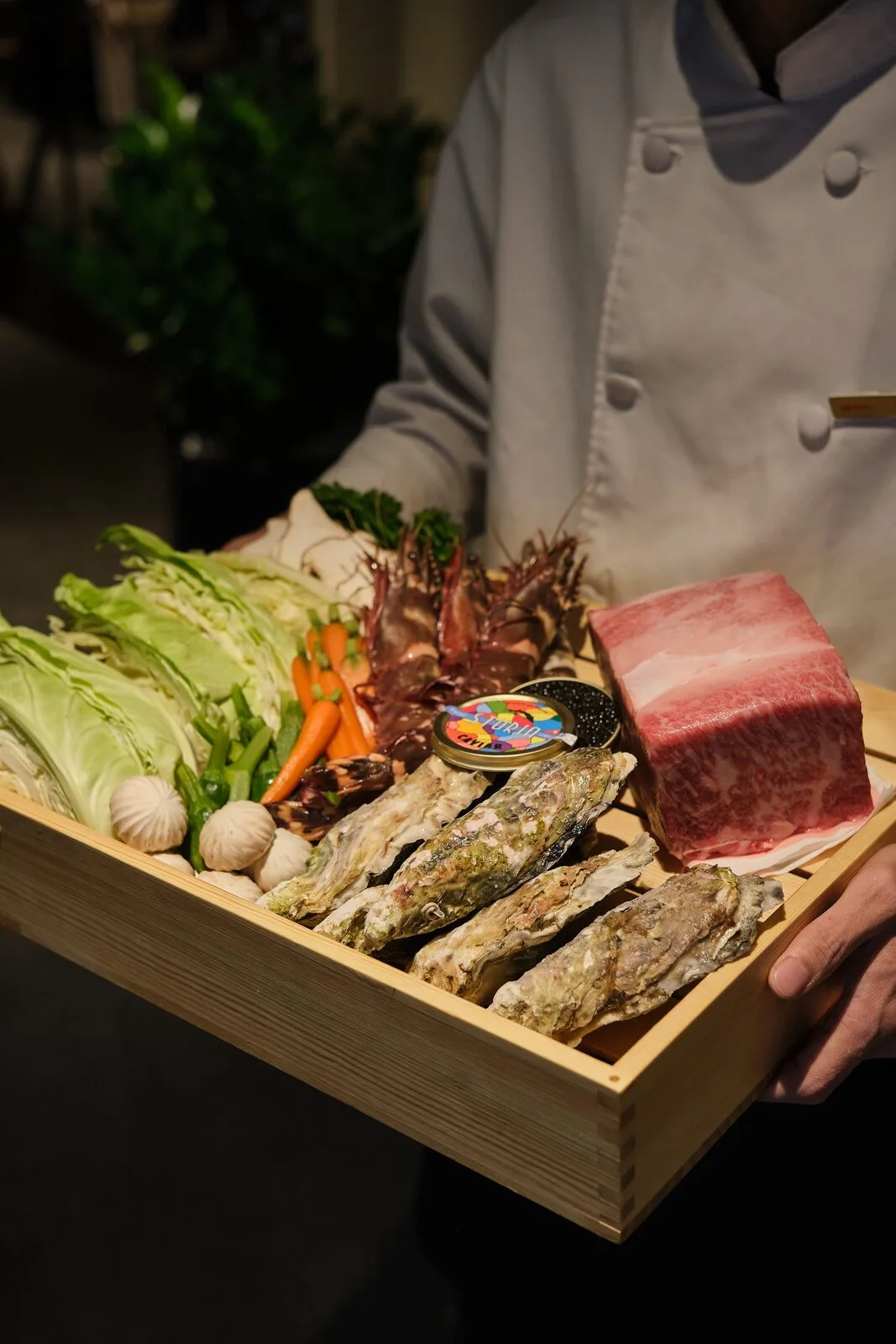
- Seafood. Prawns, scallops or fish seared quickly on the steel, keeping their sweetness and moisture inside.
- Seasonal vegetables. Seared right in the juices released by the seafood, so the vegetables soak up flavour while staying crisp.
- The main event is the beef. The climax of the meal, cut and served right there so you can eat it at its hottest.
- Fried rice or noodles. Cooked with the flavour built up on the steel throughout the meal, often the dish people remember longest.
- Dessert. A touch of light sweetness to close, served once the grill has cooled.
What makes it enjoyable is that you see the whole process. Nothing is hidden behind a door, and each dish reaches you just seconds after it leaves the grill.
Two counters, two opposite techniques in one restaurant
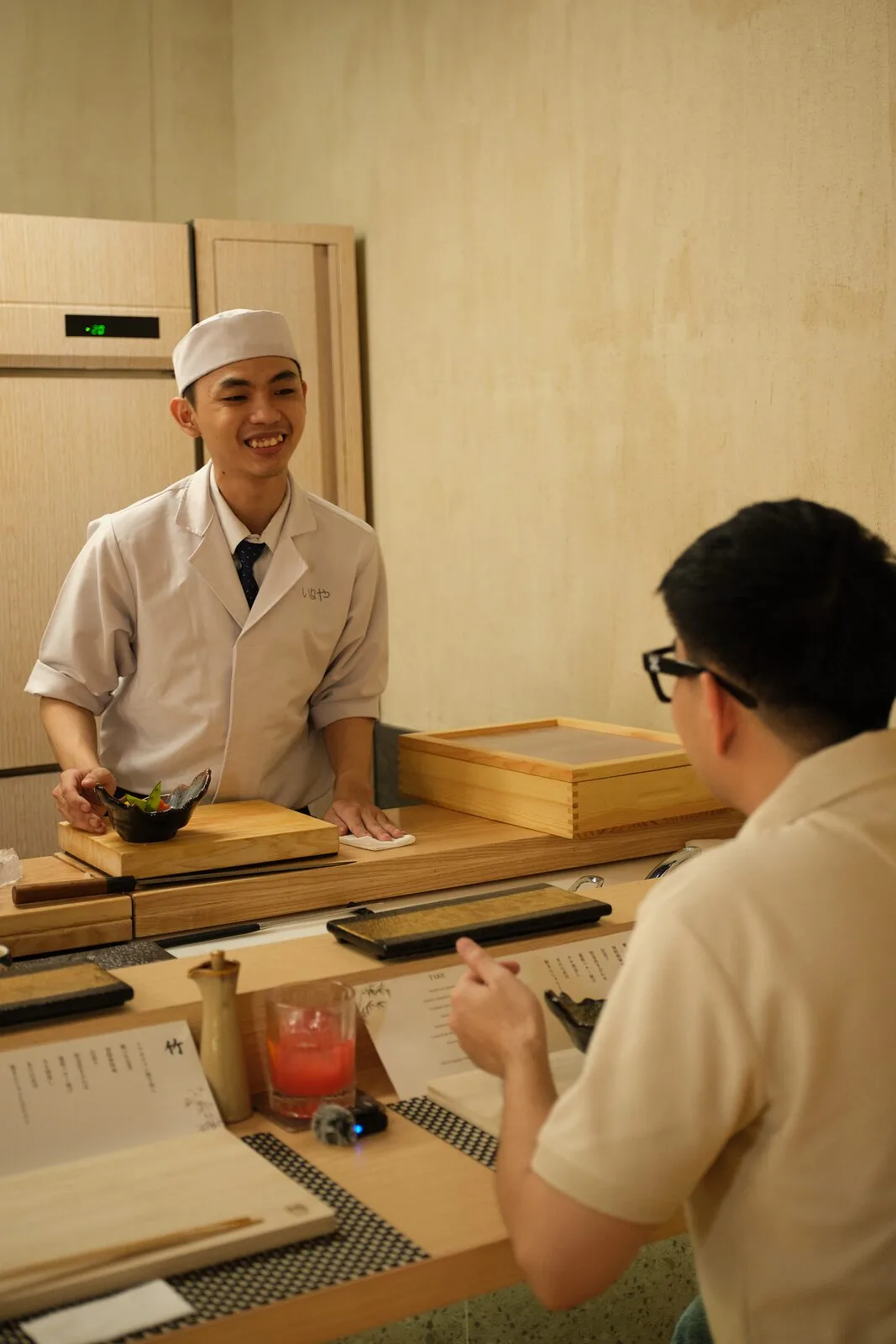
What sets Roll & Teppan Ineya apart is that the restaurant is not only about the teppan table. Alongside it is a sushi counter, and the two areas represent two extremes of Japanese cuisine.
The teppan is fire, sound and movement. The sushi counter is the opposite: no fire, almost no sound, everything happening in small, precise gestures. One wins you over with energy, the other with stillness.
The restaurant builds an omakase course for both directions, so you can choose the experience that suits your mood that evening: a lively session at the grill, or an unhurried meal at the sushi counter. For a larger group where some prefer one and some the other, this is a tidy solution.
Craft beer, a choice few Japanese restaurants pursue
Most Japanese restaurants place sake at the centre of their drinks list. Roll & Teppan Ineya takes a further step with its own, fairly extensive craft beer list.
The choice makes more sense than it first appears. Food grilled on the teppan is rich, buttery and high in protein, so a craft beer with moderate bitterness and carbonation cleans the palate between bites, something a sweet wine struggles to do as well. If you like pairing food with drinks, this is a place worth trying.
Roll & Teppan Ineya pairs a handcrafted sushi counter with a teppanyaki table grilled right in front of guests, in an intimate space in the Thao Dien area. The restaurant offers a dedicated omakase course for each experience, an à la carte selection, and a craft beer list for pairing.
Behind an open cooking surface
Cooking in front of the guest is the most demanding format for a kitchen. There is no room to redo, no door to hide the work behind, and every ingredient sits within the diner’s view.
That forces the preparation to be meticulous: ingredients are trimmed, portioned and arranged in the exact order they will be used, so the chef never has to leave their station mid-service. The steel plate temperature is controlled by ingredient group, because seafood, vegetables and beef each need different heat levels.
What few people notice is the rhythm of interaction: the chef cooks and introduces each dish at once, timing it so that as you finish one bite the next is just done. That is a skill of its own, and it lives within the spirit of omotenashi and the training standards applied across the entire Royal Sojitz group.
Where to sit and when to go
With teppanyaki, your seat is part of the meal. A seat right at the cooking surface lets you see the whole process and receive each dish the moment it leaves the pan, so if you can reserve, do ask for this spot.
Teppanyaki suits occasions when you want a meal with something to watch and something to remember: a birthday, an anniversary, or the first time you take someone out for Japanese food without knowing yet what they’ll like. The grilling in front of you is a story in itself, so the table rarely falls silent.
The restaurant is in the Thao Dien area on the Thu Duc side, so if you’re in the centre you should allow extra travel time, especially at rush hour. A teppanyaki course also needs preparation time, so booking ahead helps the kitchen plan. If anyone in your group has an allergy or cannot eat a particular ingredient, let the restaurant know when you book so they can check what can be accommodated.
Frequently asked questions about teppanyaki
Take a seat next to the grill
Some dishes taste better once you know how they were made. Teppanyaki is one of them, and the only way to understand it is to sit close enough to watch. The steel heats up, the meat touches down, and dinner begins right in front of you.
Discover more of the restaurants in the Royal Sojitz collection, or read the introduction to the full family of Japanese restaurants.
Explore more: Learn about the omakase experience at Sushi Ineya.