
Some nights you just want something hot in a bowl, the kind that leaves you warm once it’s gone. Some nights you want to sit still in front of a wooden counter and watch a pair of hands at work. And some nights you want smoke, the sound of meat hitting the grate, a whole table talking over each other. Japanese cuisine is broad enough to hold all three, only each one lives at a different address.

Royal Sojitz Vietnam runs ten restaurants across Ho Chi Minh City, spread from the heart of District 1 out to Pham Viet Chanh and Thao Dien. Instead of reading a list of addresses, start from what you feel like tonight. Each section below opens with a familiar craving, then points you to the restaurant that fits it and suggests exactly what to order once you sit down.
When you want to sit right where the food is made
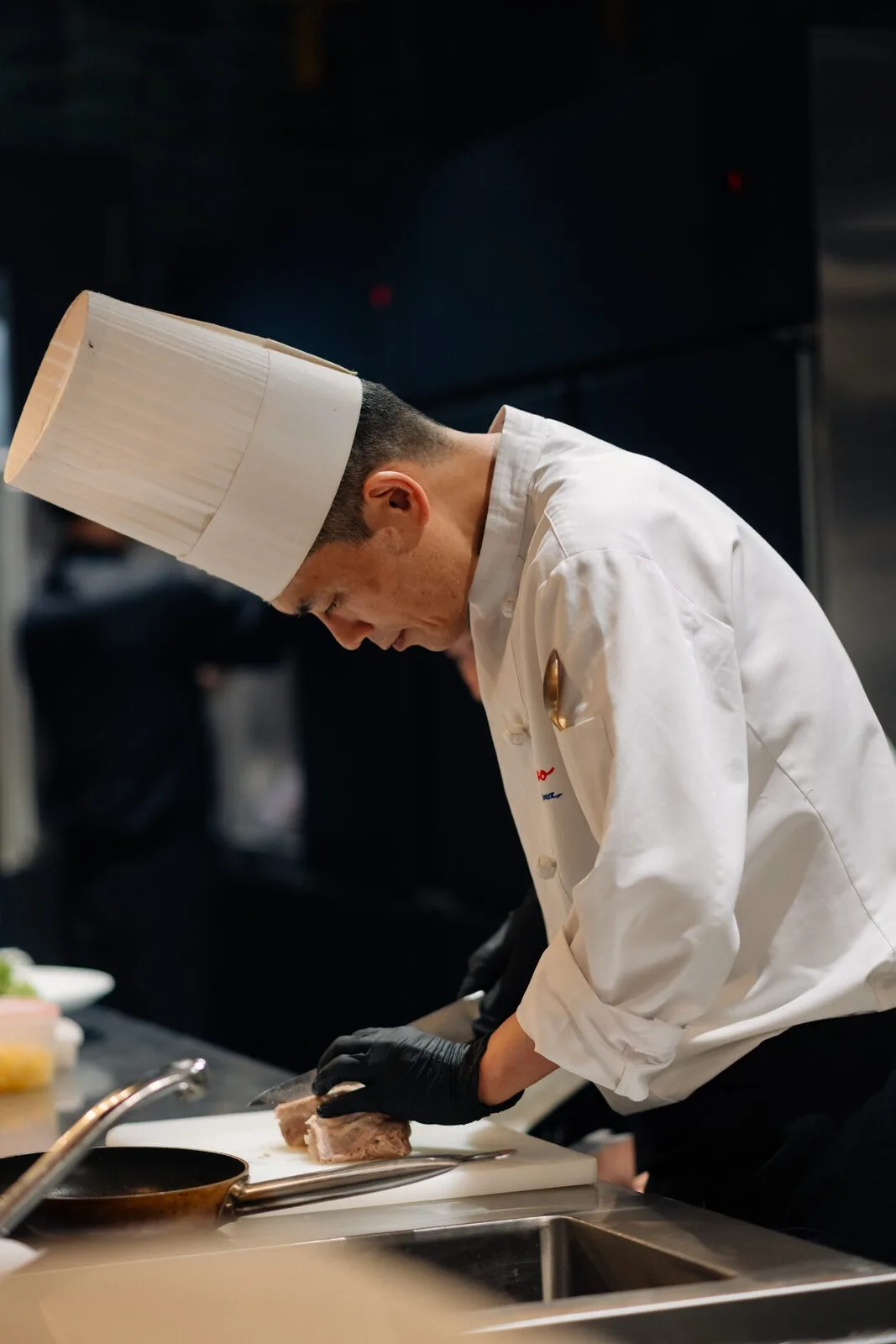
There’s a particular kind of satisfaction to sitting at the counter: the dish isn’t carried over from somewhere, it takes shape right in front of you.
At Sushi Ineya on Pham Viet Chanh, what you watch is a quiet, repeating rhythm with almost no sound to it: the left hand cradles the slice of fish, the right hand shapes the rice, a gentle press, and the piece of sushi is set down in front of you. The ingredients here change with the season, so the same seat gives you two different meals this month and next. If you want the kitchen to lead the whole meal, choose the omakase journey. And if you’re not ready to go the full distance yet, a bowl of rice piled with seafood is a gentler way to get to know this counter. It opens in the afternoon and closes on Mondays, so this is a place for the evening rather than lunch.
A little further out, in Thao Dien, Roll & Teppan Ineya sets its sushi counter right beside the teppan tables. That means a meal here can begin very quietly, with sashimi and a few pieces of the day’s nigiri, then shift suddenly into the loud, warm part when the iron plate starts to heat up in front of you. Two opposite tempos in a single meal, and the restaurant has a craft beer list long enough to stretch out both.
The counter is one of the rare spots in a restaurant where you get to see the work, not just receive the result of it.
When the smell of charcoal greets you before the menu does
At a yakitori place, the first thing to reach you isn’t the menu, it’s the smell. Binchotan is a white charcoal that burns steady and almost smokeless, so what you catch is the scent of chicken fat meeting fire, not the smell of woodsmoke.
Sumibi Ineya at 63 Pham Viet Chanh only opens once it’s dark and keeps its seats late, which suits the nights when you haven’t decided when you’re going home. On a first visit, just order a few skewers of grilled chicken and some small bites to go with them, plus a glass of shochu, the distilled spirit whose dry edge was made to sit alongside charcoal-grilled food.
The other branch, Sumibi Ineya Truong Dinh, sits near Ben Thanh and opens from midday, so the atmosphere is noticeably livelier. If you want to know whether a yakitori place has a sure hand, order the chicken thigh skewer and the chicken skin skewer brushed with tare sauce. Those two hide nothing: the thigh has to stay juicy inside, the skin has to be crisp without being burnt.
When dinner calls for a real piece of meat
Some nights only meat will solve the problem. The group has two addresses for that, and they differ in tempo rather than in seriousness.
Premium Yakiniku Ineya at 44/4 Pham Viet Chanh is where the meat is selected by marbling and origin, with A5 Wagyu cuts such as sirloin, short rib and skirt. If you order A5 Wagyu, keep one thing in mind: that piece needs only a few seconds a side, because the marbling begins to melt almost the moment it touches the grate, and a little too long is exactly how you lose the tender richness people come to Wagyu for. There’s also wagyu sushi here, a way of eating beef few people expect, and one many diners bring up.
Yakiniku Ineya Ngo Van Nam is the more everyday version of the same story. You grill it yourself, mind your own flame, and the meal stretches to the rhythm of the conversation rather than the kitchen’s. A portion of select beef with some pork belly to change things up is a safe order for a group of four, plus a few seasonal sides and the dipping sauces that come with them.

When you just need a meal that’s hot and filling
Not every meal has to be an occasion. Some lunches you’ve got forty minutes, and the only thing you want is to sit down, eat properly, and get back to work.
Ramen Ineya on Le Thanh Ton cooks its broth from beef bones, not the pork bones behind most of the ramen you’ve had. The broth comes out clearer as a result, with a clean, lingering sweetness, closer to a bone soup than to a rich, fatty one. Order one bowl as the base, and add gyoza or karaage fried chicken to share around the table. If that lunch needs to really fill you up, there’s kimchi fried rice and braised beef tendon.
Tonkatsu Ineya on Thao Dien street answers the same need with a different sound: the knife cutting through the fried crust. A portion of breaded pork with rice and shredded cabbage is the dish to start with, because it shows you straight away where the skill lies, the crust has to be crisp while the meat inside stays juicy. If you like seafood, there’s fried prawn; if you want something richer, order the Japanese curry. It opens straight through from midday into the evening and does takeaway.
When the whole table looks into one pot
Hot pot is one of the rare dishes where everyone at the table has to take part. No one eats their own portion, everyone waits together, reaches in together, and the meal slows down on its own.
Hakata Ineya on Ngo Van Nam brings the flavors of Hakata, the region in the north of Kyushu island and one of the most distinctive food cultures in Japan. A hot pot set in the middle of the table is the most obvious way to use this restaurant, especially with a large group or older family members along. Alongside that, the restaurant also has sashimi, grilled dishes and rice sets, plus a sake list so you can choose what to drink by the dish rather than by habit.
When the meal starts at seven in the morning
Among nine Japanese restaurants, a European one might sound out of step. But The Royal isn’t just any European place: this is classic European food served in the spirit of Japanese hospitality, what the Japanese call yōshoku in its refined form. Charcoal-grilled steak, French onion gratin soup, pasta, then a finish of custard pudding or crème brûlée: a familiar European menu, but tended to in every detail.
The Royal on Dong Du opens from seven in the morning until eleven at night, which also makes it the most flexible address in the group. You can come in for breakfast with a coffee and stay on to work, return in the evening for a plate of steak and a glass of wine, and close with a classic dessert.
The Royal serves classic European cuisine in an elegant setting right in the center of District 1, open all day with separate menus for lunch, dinner and special occasions. It’s a familiar choice for tables that need polish while staying warm.

What stays the same as you move from one restaurant to the next
Ten restaurants across three areas, cooking ten kinds of food, opening at different hours. But there’s one thing you should recognize whichever door you walk through, and that’s the level of seriousness behind the kitchen.
It starts with the standard of ingredients: seafood, meat and Japanese ingredients are selected by season and checked before they reach the kitchen. Next is the technique behind each dish, something you can’t buy and can only build up over enough repetitions.
The part most often overlooked is the service: the team is trained to introduce the dishes, suggest how to eat them, and read the rhythm of the table so they know when to come over and when to step back. Over all of it is the spirit of omotenashi, a hospitality that attends to every gesture without showing off, together with Royal Sojitz’s training and quality-control system applied consistently across the whole group.
And if you’re choosing by the occasion
Sometimes the question isn’t what to eat, but who you’re going with.
- A quick lunch in the middle of a workday. Ramen Ineya or Tonkatsu Ineya, both with tidy lunch portions that come out fast.
- After work, a few friends. Sumibi Ineya for charcoal skewers and drinks, or Yakiniku Ineya Ngo Van Nam if the group wants to grill their own.
- A multi-generation family gathering. Hakata Ineya with a hot pot in the middle of the table, easy food for both older relatives and young children.
- Hosting a partner, needing quiet and polish. Sushi Ineya for an omakase journey, or The Royal if your guest is more at home with European food.
- An anniversary, when you want something to remember. Roll & Teppan Ineya with the grilling right in front of you, or Premium Yakiniku Ineya for a proper meal of meat.
For most of the restaurants, it’s best to book ahead, especially on weekends. If anyone in your group has an allergy or can’t have a particular ingredient, let us know when you book so the restaurant can check what it can accommodate.
Frequently asked questions

Start from what you feel like
You don’t need to know all ten names to begin. You just need to answer one very small question: whether tonight you want to hear the sound of water coming to a boil, meat hitting the grate, or a knife cutting through a crisp crust. The rest is taken care of.
Read more about each dish in the group: omakase at Sushi Ineya · beef-bone broth ramen · Hakata hot pot in District 1.