
The lid lifts, and a plume of white steam rises carrying the scent of simmered chicken and fresh chives. The broth is crystal clear, unadorned, with no heavy sauce to hide behind. You spoon out a taste, and it catches you off guard: how can something that looks so plain be this deeply sweet?
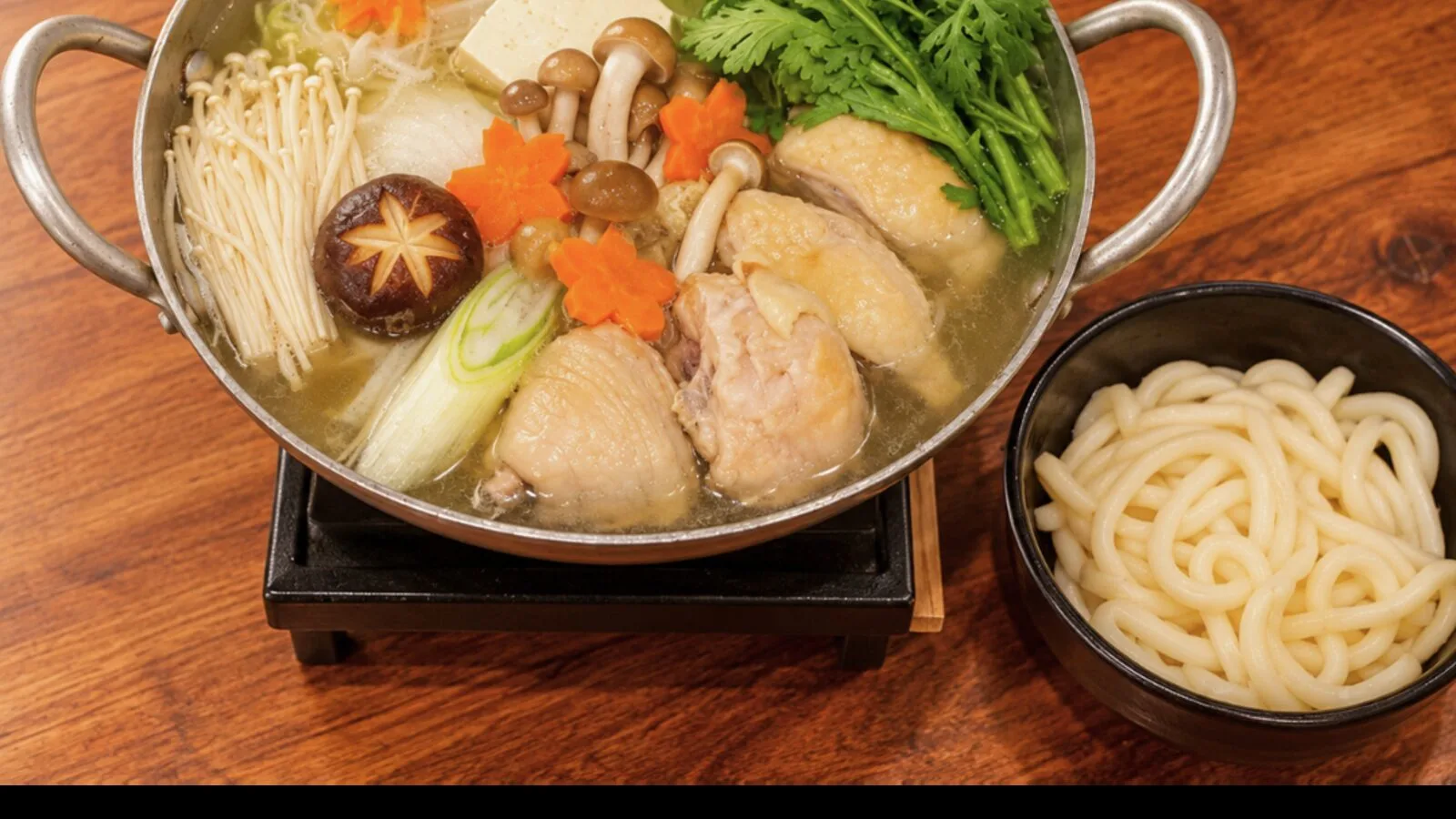
In Vietnam, hotpot means a rich, deeply seasoned broth – the spicier and more intense, the merrier. Japanese hotpot moves in almost the opposite direction: a clear broth, a light touch, letting the ingredients speak for themselves. And on the map of Japanese hotpot, there is one name the locals speak of with a particular reverence – Hakata. It is also the name that Hakata Ineya, a restaurant on Ngo Van Nam street in the heart of District 1, chose to put on its sign.
Hakata: one name, an entire cuisine
Hakata is the central district of Fukuoka, a city on the island of Kyushu in southern Japan. For the Japanese, Fukuoka is not just a major city – it is where you go to eat. Its seaside location, its closeness to mainland Asia, and its long history as a trading port turned Hakata into a place where fresh seafood and comforting dishes were refined to an art.
Three names made that reputation: motsunabe – beef offal hotpot, mizutaki – clear-broth chicken hotpot, and mentaiko – spicy marinated cod roe. Japanese travelers to Fukuoka often bring these three home as stories to tell. What is delightful is that at Hakata Ineya, you will find all three on the same menu.
Japanese hotpot does not compete with its ingredients. It clears the way for them to speak.
Mizutaki: the hardest clear broth of all
If you had to choose one dish to understand the spirit of Hakata, it would be mizutaki. The name means something close to “cooked with water” – and that is exactly it: chicken, water, a little vegetable. No soy sauce, no miso, nothing to lean on.
The fewer the crutches, the harder it is for the cook to hide. The broth has to be simmered from chicken bones and meat long enough for the sweetness within the bones to fully release into the water, giving it a deepening flavor and a gentle, natural body while staying clear. Under-simmered and it is bland; overdone and it turns cloudy and harsh. The cook has to hit precisely the middle of that range.
There is a rhythm to eating mizutaki, too. Many Japanese begin by ladling out a cup of the plain broth to drink first, like a bowl of soup, before dropping anything into the pot. It is a way of showing respect for the most painstaking part of the dish.
Motsunabe: a workers’ dish, now a specialty
Where mizutaki carries an air of refinement, motsunabe tells a different story. After the war, cuts of beef offal that few people wanted were cooked by Fukuoka’s laborers together with chives, cabbage and garlic in a richly flavored broth. That humble dish gradually spread across Japan and became a point of pride for Hakata.
What makes motsunabe so appealing is its texture: the offal is meticulously cleaned and simmered until tender yet still pleasantly springy, soaked through with broth. On top sits a thick layer of green chives, along with sliced garlic and chili flakes. This is a dish for evenings that call for warmth and a little cheer.
And as with every Japanese hotpot, the best part often comes last. When the meat and vegetables have run low, noodles or rice are added to the broth that has concentrated over the course of the meal. The Japanese call this step shime – the finale. By then the broth has gathered the flavor of everything that has passed through it.
More than one kind of hotpot
The hotpot menu at Hakata Ineya reaches well beyond the two famous dishes above, enough to suit the tastes of the whole table:
- Simmered chicken hotpot (mizutaki). A clear, clean-sweet chicken broth – the gentlest choice, welcoming even to those new to Japanese flavors.
- Beef offal hotpot (motsunabe). Rich, generous with chives and garlic, with an intriguing texture – the most emblematic dish of the Hakata region.
- Beef shabu hotpot (shabu). Thinly sliced beef swished quickly through the broth, dipped in sesame sauce or tangy ponzu.
- Yellowtail shabu hotpot (buri-shabu). Slices of yellowtail lightly blanched, keeping the richness and seasonal sweetness of the fish. A rare find in Saigon.
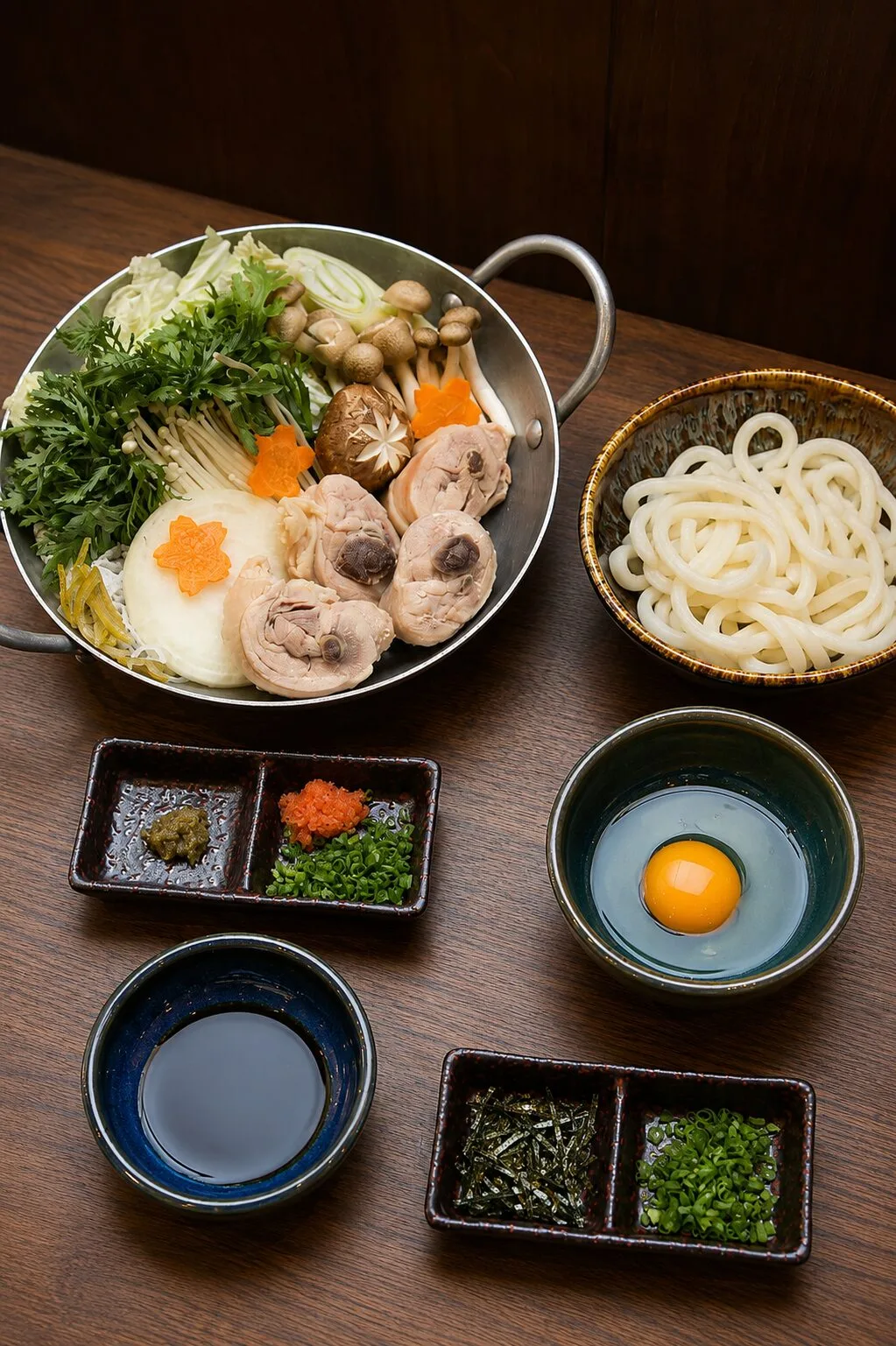
- Kansai-style beef sukiyaki. Unlike the simmering broth hotpot many Asian diners expect, the beef and vegetables are cooked in a sweet-savory warishita sauce (soy sauce and sugar), then dipped in beaten raw egg – so many first-timers are surprised, because it barely resembles the “hotpot” they had in mind.
Every pot comes with a platter of vegetables, mushrooms and tofu, so you can set the pace of the meal yourself.
A Hakata table is more than hotpot
In Fukuoka, dinner rarely begins straight away with the hotpot. People usually open with a few cold dishes and seafood, saving the pot for when the conversation has warmed up. The Hakata Ineya menu follows exactly that rhythm.
The sashimi here is worth starting with: yellowtail, salmon, bigfin reef squid, sweet shrimp, and the richly marbled belly of tuna, available individually or as a mixed sashimi platter for the table. Alongside it is mentaiko – spicy marinated cod roe, the third Hakata specialty we mentioned earlier. Here it is served as a standalone small dish, good to nibble alongside sake.
If you are in the mood for grilling, the skewers section offers chicken meatballs, chicken gizzard, okra, quail egg and pork belly. The grilled dishes go further with salt-grilled yellowtail collar, cod grilled in sweet miso, and grilled beef tongue – dishes familiar from Japan’s evening eateries.
The drinks are chosen with intent, too. The sake list includes bottles from the very homeland of the food: Niwa no Uguisu from Fukuoka prefecture, and Nabeshima from neighboring Saga prefecture – both from the Kyushu region to which Hakata belongs. Drinking a cup of Kyushu sake beside a Kyushu hotpot is the closest way to understand why they belong together.
Hakata Ineya is the address dedicated to Hakata cuisine within the Royal Sojitz group, set on Ngo Van Nam street, a street well known to the Japanese community in District 1. The menu revolves around Kyushu hotpots, seasonal sashimi and small dishes to pair with sake, served in the spirit of omotenashi.
Behind a clear broth
A clear broth lays everything bare from the very first spoonful: how fresh the ingredients are, how carefully the pot was tended. That is why restaurants that take their craft seriously tend to invest the most in the part you see the least.
At Hakata Ineya, that begins with ingredient standards: seafood and meat selected by season, while the offal for the motsunabe must pass through meticulous cleaning – the step that decides whether the dish succeeds or fails. Next comes the broth technique, with time and temperature controlled so the broth reaches exactly the desired clarity and sweetness.
The way the vegetable platter is arranged and the order in which ingredients go in is guided as well, because the sequence into the pot directly shapes the flavor of the broth by the end of the meal. The service team will explain how it is done for any table new to it. Underlying all of it is the spirit of omotenashi and Royal Sojitz’s training and quality-control system, applied consistently across the entire group.
A few small things to make the hotpot better
Japanese hotpot is a dish to take slowly, and there are no strict rules. But a few small Japanese habits will change the meal noticeably.
Start with a cup of the plain broth before dropping anything into the pot. That is when you taste the work of the broth in its purest state, and it also gives you a benchmark to compare against as the flavor deepens toward the end of the meal.
Add ingredients in batches, not all at once. Firm vegetables and mushrooms first, meat and seafood after, a little at a time, just enough to eat. This keeps everything cooked to the right point rather than overdone, and lets the broth deepen in a controlled way.
For the swished dishes like beef shabu or yellowtail shabu, a slice of meat needs only a few seconds through the boiling broth – lift it out the moment it changes color. Left longer, the sweetest richness melts away into the pot instead of staying on the meat.
And do not skip shime, the closing act. When the meat and vegetables have run low, order noodles or rice to cook in the concentrated broth. Many Japanese consider this the finest part of the whole meal, and to skip it is to leave the hotpot unfinished.
When to choose a Hakata hotpot
Hotpot is a dish for crowded tables and long stories. A single pot set in the middle, everyone reaching in, waiting together, debating what to add next – that rhythm naturally slows the meal down and warms it up. That is why Japanese hotpot suits a family gathering, an evening reuniting with old friends, or a business dinner where you want a mood that is open rather than formal.
If you are with someone new to Japanese food, mizutaki is often an easy place to begin: a clear broth, a light flavor, chicken and vegetables that are all familiar. And if the whole table is already well versed, motsunabe is worth trying once to see why Hakata is famous.
A bottle of Kyushu sake, or a cup of shochu mixed with warm water the way the Japanese drink it beside a hotpot, will round the meal out. Depending on the table’s tastes and the current drinks list, the Hakata Ineya team can suggest a fitting choice.
Frequently asked questions about Japanese hotpot
One clear broth, one long evening
What is precious about Hakata hotpot is not any outward elaborateness. It lies in the harder choice: to take away rather than add, and then to let the quality of the ingredients and the time spent at the stove speak for themselves. One clear pot set in the middle of the table, warm steam rising, and an evening that naturally stretches longer.
Discover more restaurants in the Royal Sojitz group, or book a table at Hakata Ineya to taste that first spoonful of broth for yourself.
Explore more: Experience binchotan charcoal-grilled yakitori at Sumibi Ineya.