
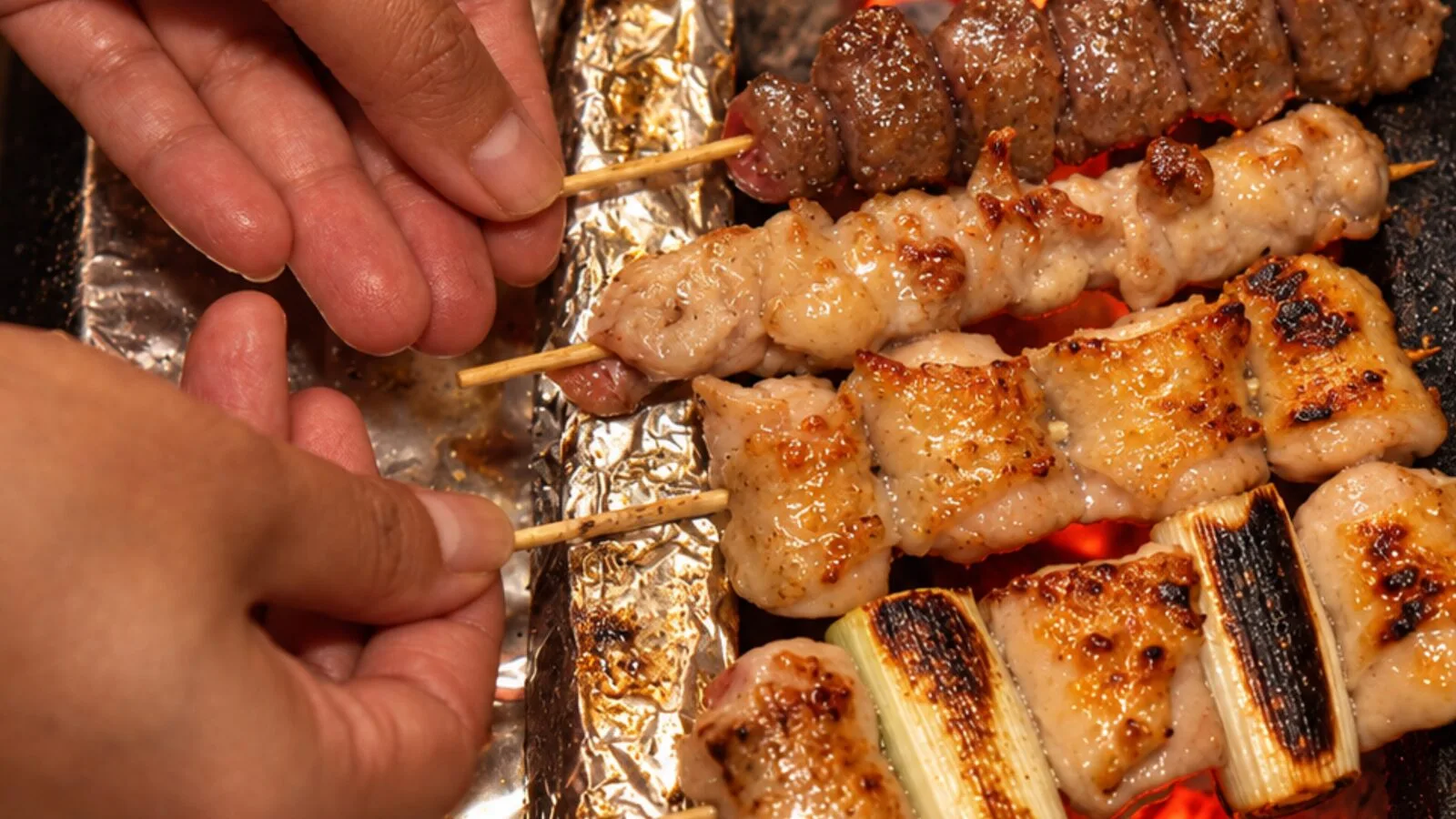
The charcoal glows red, yet you can barely see any smoke. A chicken skewer turns slowly over the grill, fat dripping down with a crackle, and what rises is the scent of grilled meat rather than smoke. That small detail is a whole decision about ingredients, and it shapes the flavour of every skewer.
An izakaya is the kind of place the Japanese drop into after work: order a few small dishes, drink slowly, linger. Yakitori is the dish at the heart of such places. In Ho Chi Minh City, Sumibi Ineya brings both of these across, with two venues that serve two different kinds of evening.
Binchotan: the most expensive charcoal in a Japanese kitchen
The word sumibi in the restaurant’s name means charcoal fire, and the charcoal in question here is binchotan, also known as white charcoal.
Binchotan is fired from hardwood at very high temperatures and then cooled abruptly, producing a dense, heavy stick that rings like metal when tapped. Its properties are quite different from ordinary charcoal: it burns hot and stays steady for a long time, giving off almost no smoke and no off-odours.
That changes grilling in two ways. The high heat sears the surface of the meat quickly, sealing in the juices instead of letting them run out. And because there is no smoke clinging to it, what you taste is the flavour of the meat together with the light caramel on its surface, not buried under a layer of smoke.
Good charcoal adds no flavour to the food. It simply makes sure nothing is taken away.
Yakitori is more than chicken on a stick
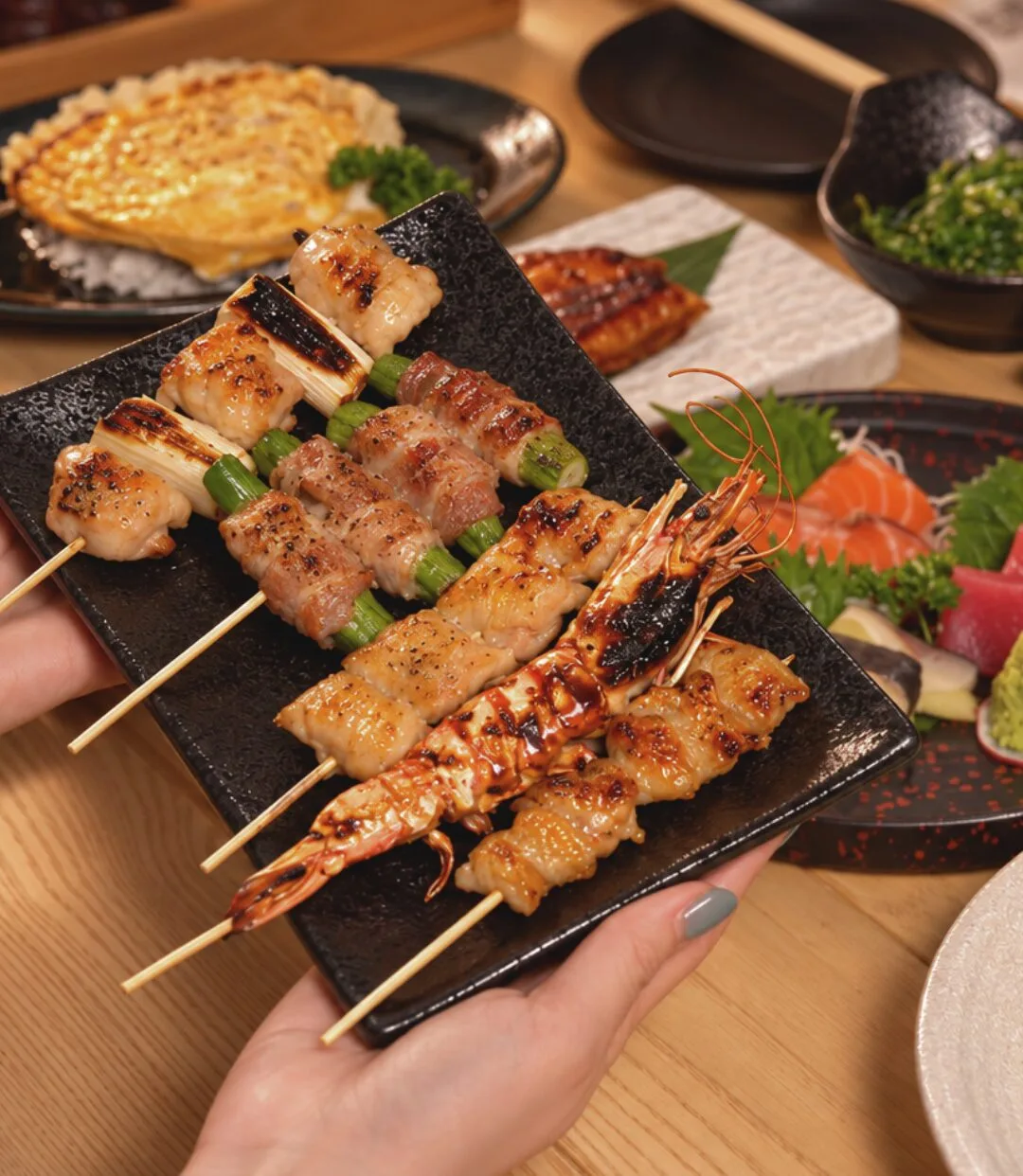
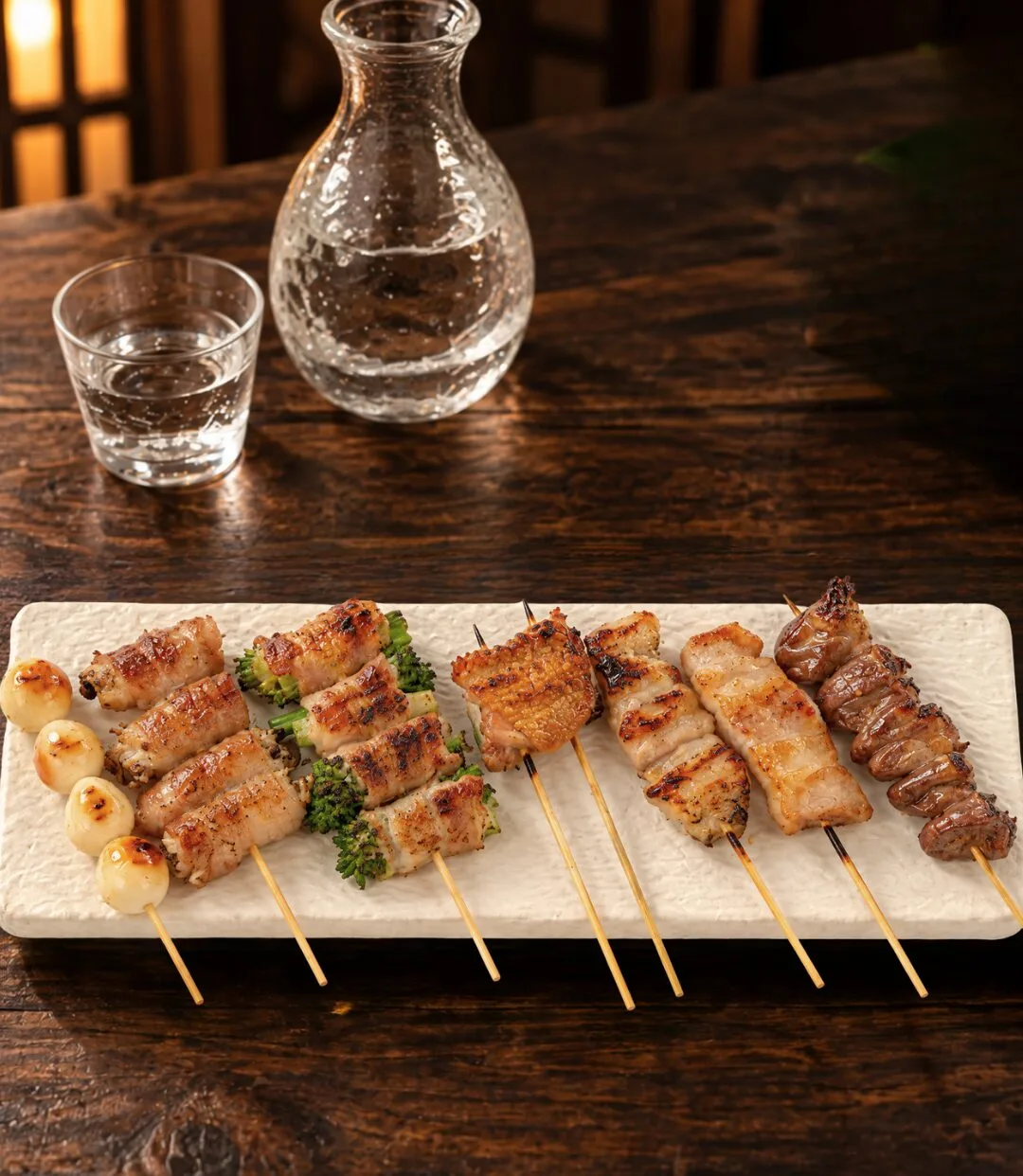
At a serious yakitori place, the chicken is broken down into many parts, each going onto its own skewer with its own way of grilling. That is why the menu is long and full of unfamiliar names:
- Negima. Thigh meat alternating with leek, the most common skewer and also a test of skill: the meat has to stay juicy while the leek cooks sweet without burning.
- Tsukune. Minced chicken meatballs, sometimes served with a raw egg yolk for dipping, for a gentle richness.
- Kawa. Chicken skin grilled until crisp, one of the most addictive skewers for those who know the dish.
- Sunagimo. Chicken gizzard, springy and crunchy, usually needing nothing more than salt.
- The vegetables. Okra, shiitake mushrooms or spring onion, grilled over the same charcoal to balance out the meat skewers.
- Beyond chicken. Pork belly, quail eggs and shishamo fish widen the menu for tables that want a change of pace.
With each skewer, you are usually asked whether you would like tare or shio. Tare is a rich soy-based sauce, brushed on in many layers during grilling, and every place keeps its own pot going for years. Shio is simply salt, for the parts whose natural flavour is already enough, or that need nothing to cover them.
An izakaya is not a beer joint
Many people translate izakaya as a beer joint, but its rhythm is quite different. At an izakaya, food and drink run side by side from start to finish, and you order in small waves rather than laying everything out at once.
A meal usually opens with a few cold dishes or vegetables, then moves on to the grilled skewers, interspersed with fried or hot dishes once the conversation has stretched out. No one is in a hurry, and there is no main course to wait for. It is precisely that spread-out rhythm that makes an izakaya suited to evenings you want to linger over without feeling heavy.
The drinks follow the same spirit. Alongside beer, shochu is a familiar choice: a Japanese distilled spirit, often diluted with warm water or soda so you can sip it for a long time without it feeling harsh. Sumibi Ineya has a dedicated section of the menu for shochu, and the staff can suggest one that suits the dish you are ordering.
Two venues, two kinds of evening
Sumibi Ineya has two addresses, and they are not copies of each other. Choosing the right one will suit your group better.
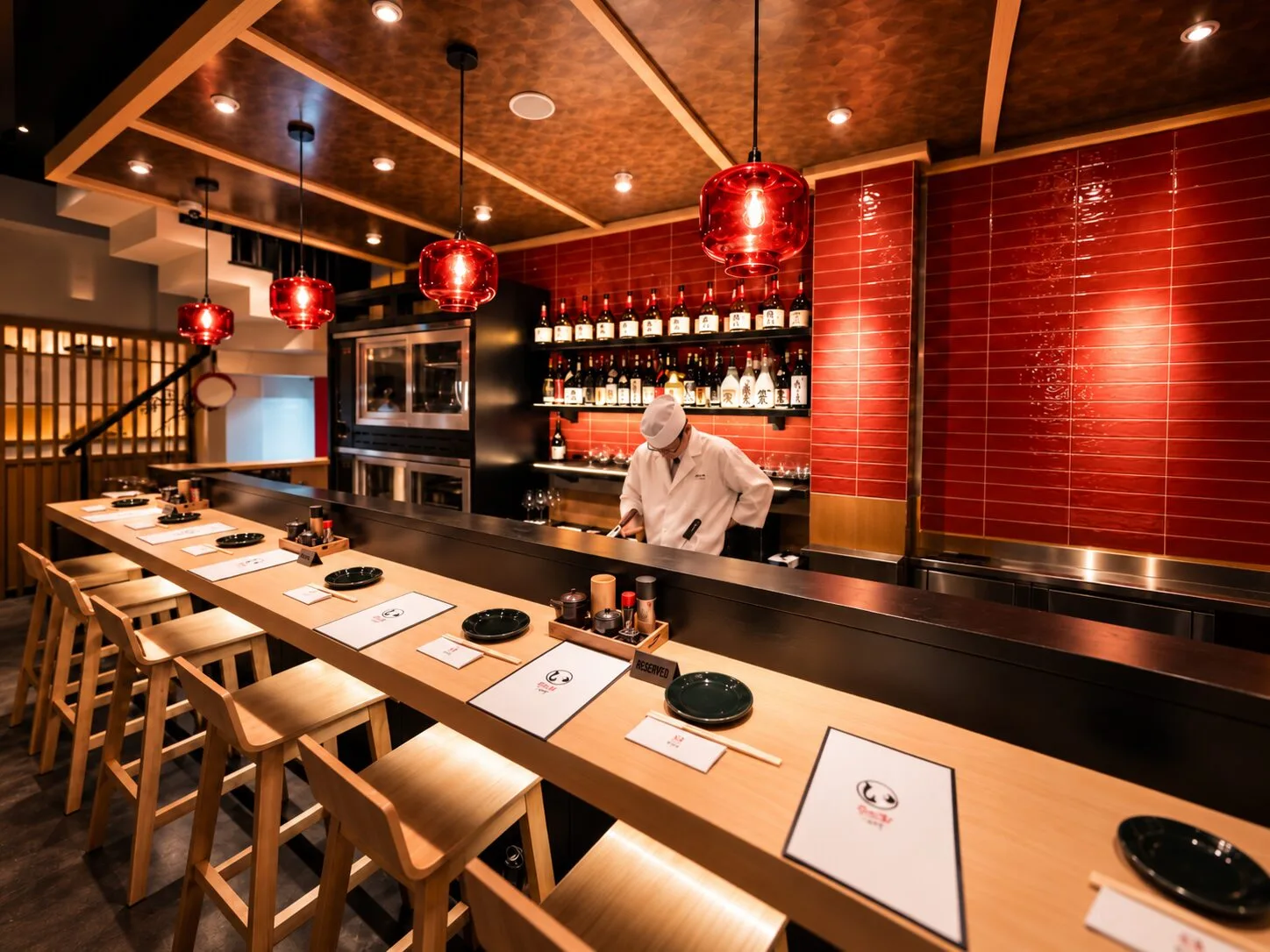
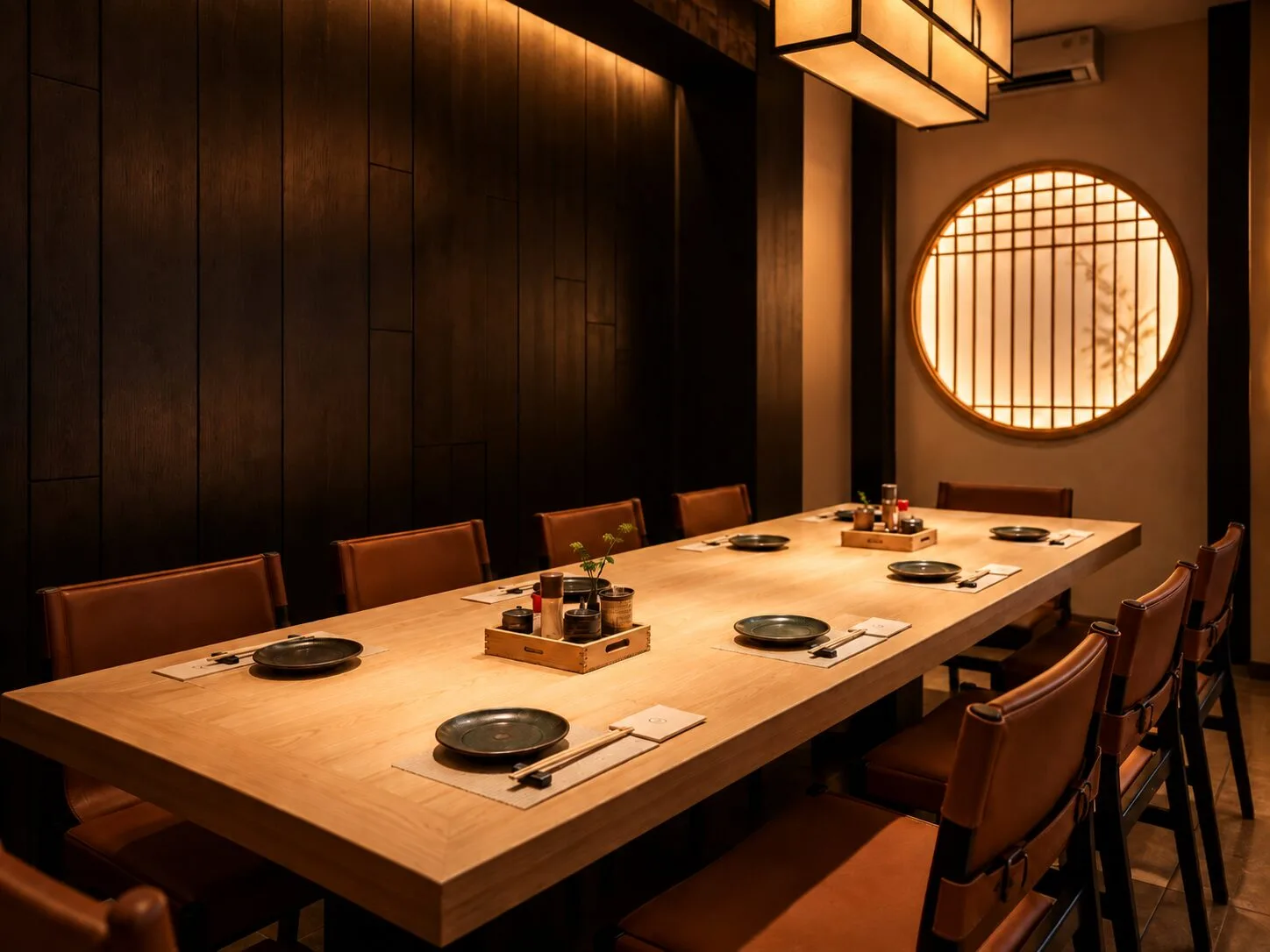
Pham Viet Chanh: quieter, open later
This venue opens in the late afternoon and serves until late, with a layout that leans toward more separated tables. It suits an after-work meal where you need to be able to talk, a small group, or an evening you want to stretch out without feeling rushed.
Truong Dinh: lively, near Ben Thanh
This venue sits in the Ben Thanh area and opens all day from noon, so it is more flexible on timing. The atmosphere is bustling, well suited to larger groups, tables that want to share many dishes and a cheerful evening in the heart of the city.
Sumibi Ineya is an izakaya specialising in yakitori grilled over binchotan charcoal within the Royal Sojitz group, with a wide range of skewers, small dishes to go with your drinks and a dedicated shochu list. The two venues carry two different atmospheres so you can choose by group and by occasion.
Behind a charcoal grill
Charcoal grilling is the style of cooking with the fewest tools to help. There is no heat dial, no timer; everything rests on a trained eye and a practised hand.
At Sumibi Ineya, that begins with portioning and skewering: every piece on the same skewer must be even so they cook at the same time, and the spacing between pieces has a direct effect on how they cook. Next comes managing the fire, because different parts of the chicken need different spots on the grill, hotter or cooler.
The deciding factor is the timing of service: a skewer is at its best the moment it leaves the grill, so the kitchen has to pace itself to how fast each table eats rather than cooking in batches. That is the kind of coordination between the kitchen and the floor that lives within the omotenashi spirit shared across the Royal Sojitz group.
How to order at an izakaya to keep the right rhythm
There are no rules, but a few habits will make the evening flow more easily.
Order in waves; don’t order everything at once. Three or four skewers along with a couple of small dishes is enough to start, then order more when it feels right. This keeps the food hot and stops the table from piling up.
Try both tare and shio on the same type of skewer if you are curious. It is the same piece of meat, but the two seasonings give two quite different flavours, and it is the quickest way to learn which you prefer.
Eat the skewer as soon as it is served, while the outside is still dry and crisp. With skewers that have skin or fat, letting them cool even a little changes the texture right away.
And if you are unsure what to drink, just ask. A cup of shochu with warm water pairs with the richer skewers better than many people expect, and the staff know the menu better than anyone.
Frequently asked questions about izakaya and yakitori
Pick an evening by the charcoal grill
An izakaya is not a place to eat your fill and leave. It is the kind of place where you sit down, order a few skewers, and realise two hours have slipped by. The charcoal still glows, fresh skewers keep coming, and the conversation isn’t ready to stop.
Discover more of the restaurants in the Royal Sojitz group, or read the introduction to the full collection of Japanese restaurants.
Discover more: another style of shared dining table, Hakata hot pot in District 1.