
You sit down at the wooden counter, open the menu just once to choose your course, then close it. From that moment you order nothing more – the meal unfolds on its own, course by course. And when the first piece of sushi is set down before you, within just a few seconds, as warm rice meets cool fish and the two melt together on your tongue, you understand why people are so willing to hand their entire dinner over to someone they have only just met.
Omakase does not hand you the right to choose each dish. So what makes diners still choose omakase for their most special dinners, and keeps them coming back? The secret is not the price, but something deeply human: trust. You place your dinner in the hands of a craftsman, and in return you receive the finest of what the day has to offer. Let us step into that journey, from the meaning of a single word to the moment the last piece of fish melts away.
A dinner you choose only once
Omakase (お任せ) comes from the verb makaseru – “to entrust.” Saying “omakase” to the chef is much like saying: “Tonight, I trust you.” You choose only the course, without weighing each dish; the person behind the counter takes care of the rest: selecting the freshest ingredients of the day, timing each beat, and setting down every portion at the exact moment it tastes best.
That does not mean the meal is left entirely to chance. At Sushi Ineya, the omakase courses are published in advance with the list of stages you will pass through, so you can choose the course that suits your occasion. The “entrusting” lies in something more subtle: within that framework, the chef decides which of today’s fish deserves a place at the counter, which fish needs a little more ageing to deepen its flavor, and how each piece is finished. The same course carries a different character from one season to the next – and that is exactly what makes omakase feel alive.
Omakase is not about “what you eat,” but about being led through a meal by a skilled craftsman.
The one who decides the meal: the itamae
At the heart of that experience stands the sushi chef, known in Japanese as the itamae. Behind the calm exterior lie years of hard training: traditionally, a craftsman may spend years just learning to cook the rice properly, before ever being allowed to touch the knife and the fish. Because in sushi, the thing that looks simplest is the hardest of all.
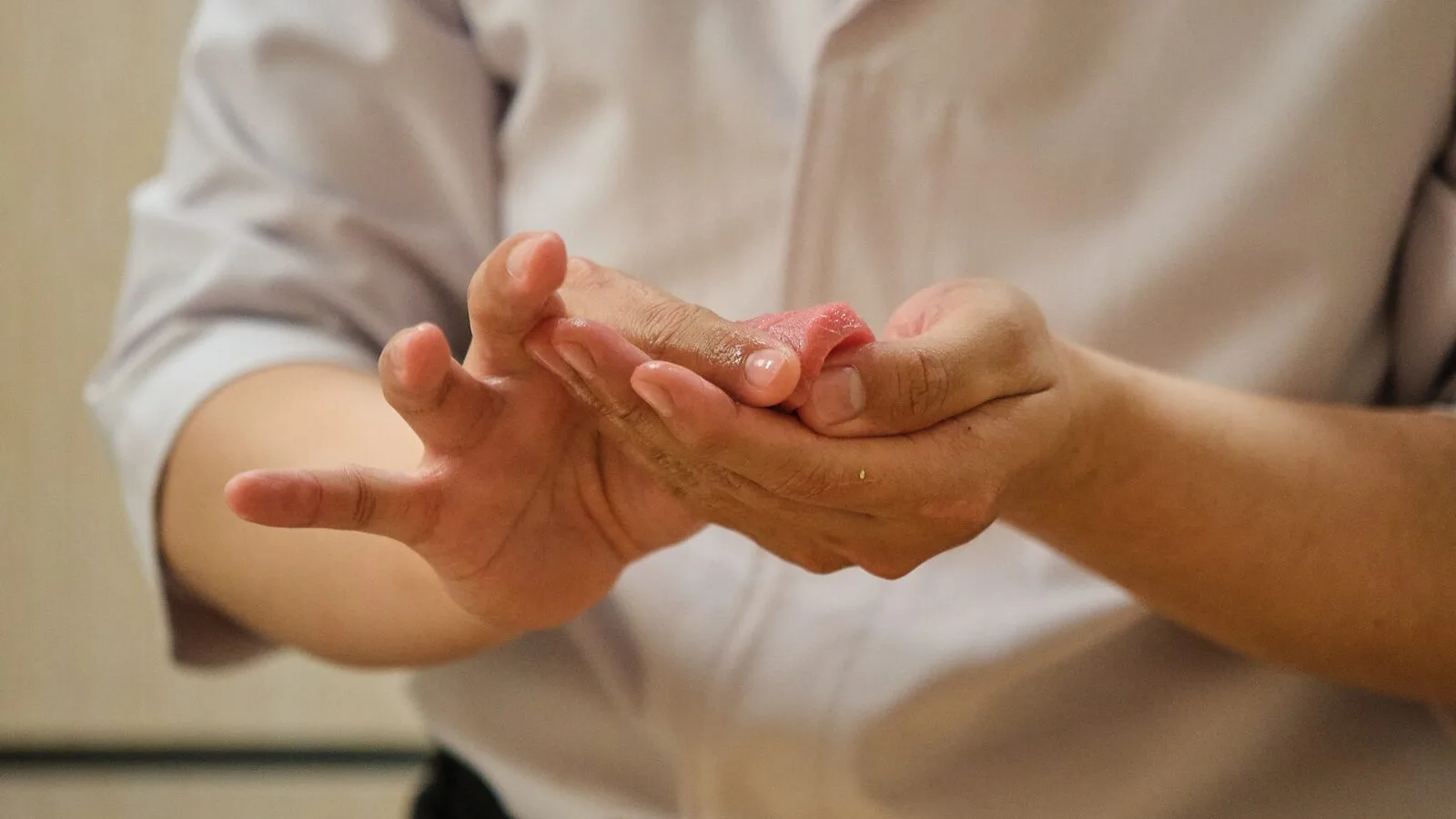
Their skill hides in details you can barely see: the pressure of the grip, just enough for a piece of sushi to reach your mouth intact and then dissolve the instant it touches your tongue; the cut of the knife along the grain of the fish; which fish needs a few days of ageing to draw out its sweetness, and which must be used at once. And above all, the ability to read you – watching how you eat to know whether to go faster or slower, to add more or to stop. At the Ineya counters, every meal is therefore a quiet dialogue between the one who makes and the one who savors.
The secret is not the fish, but the rice
A surprise to many: in the world of sushi, the hardest part is not the fish, but the rice – known in Japanese as shari. A prime piece of fish laid on badly shaped rice is spoiled all the same.
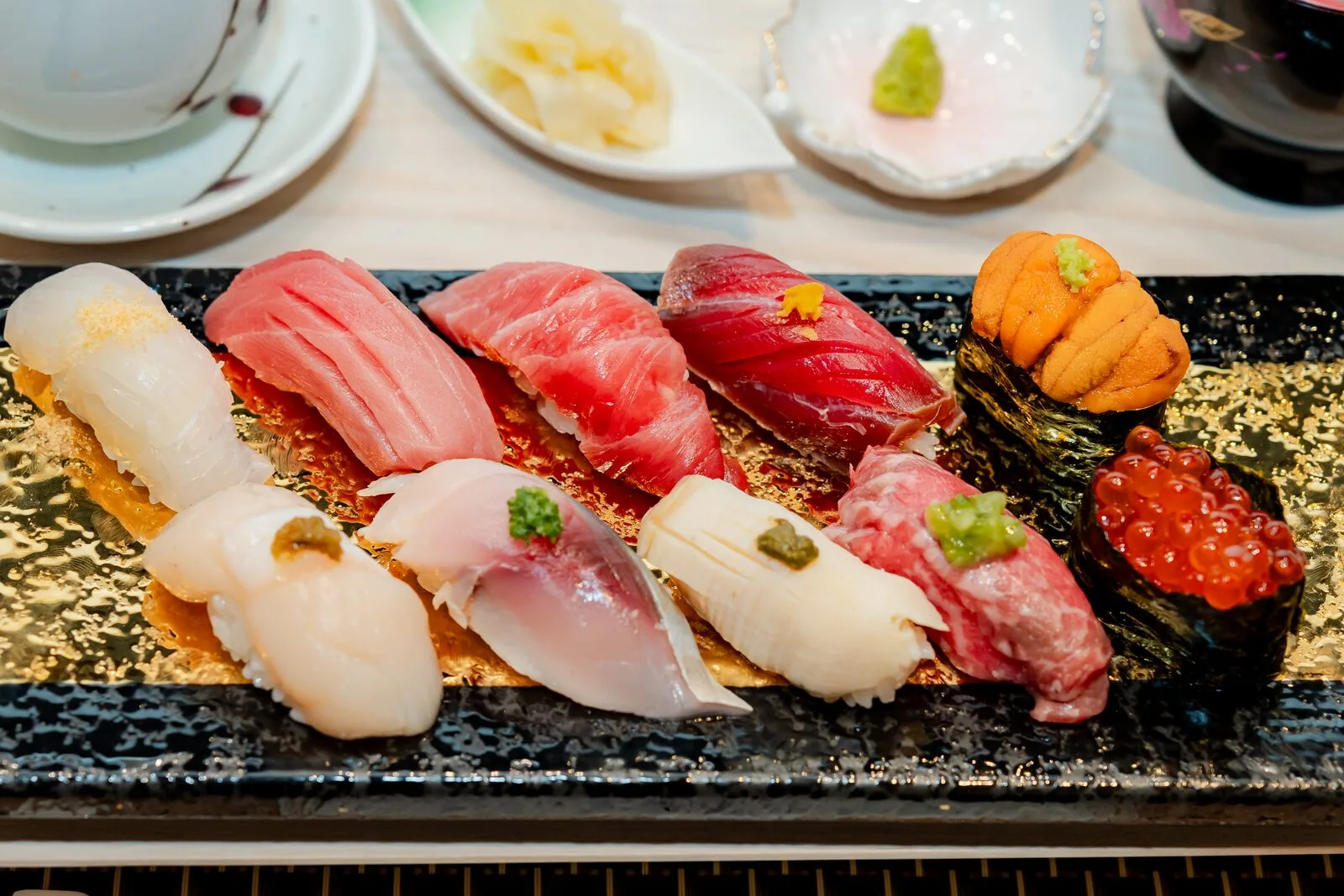
Sushi rice is seasoned with vinegar in its own proportions and served at a temperature the chef controls carefully. Depending on the fish, the shari may be kept a little warmer or adjusted to strike the best balance of flavor and texture. When a piece of nigiri touches your tongue, the slightly warm rice meets the cool fish to create a moment of contrast, and then the two melt together. That is why sushi is at its best in the first few dozen seconds, and also why omakase serves one piece at a time, fresh from the chef’s hands, rather than laid out on a full plate.
How is an omakase meal at Sushi Ineya led?
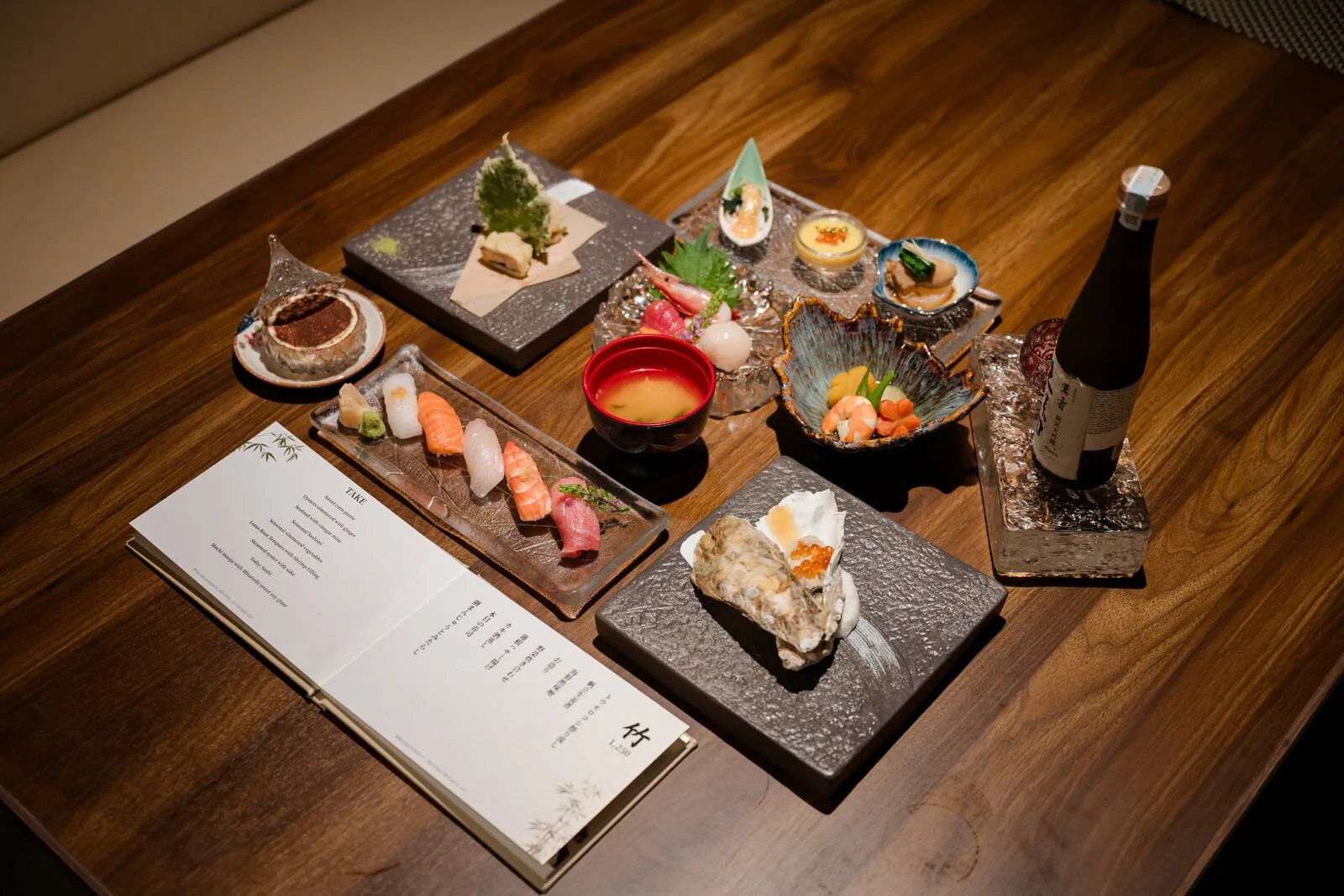
A meal at Sushi Ineya does not open with sushi. This is a multi-stage course in the spirit of kaiseki, built like a piece of music: a gentle opening, a rising climax, then a soft close – and sushi is the penultimate movement, once your palate has been led through the full range of notes. That journey usually passes through seven stages:
- A fresh, cooling opening. Vinegared mozuku seaweed and seafood jelly – two small dishes that awaken the palate with a gentle sourness and a cool sensation.
- A deeply flavored simmered dish. Saury simmered with pickled plum, or capelin cooked with sansho pepper – the nimono technique lets the flavor soak deep into every fiber of the fish.
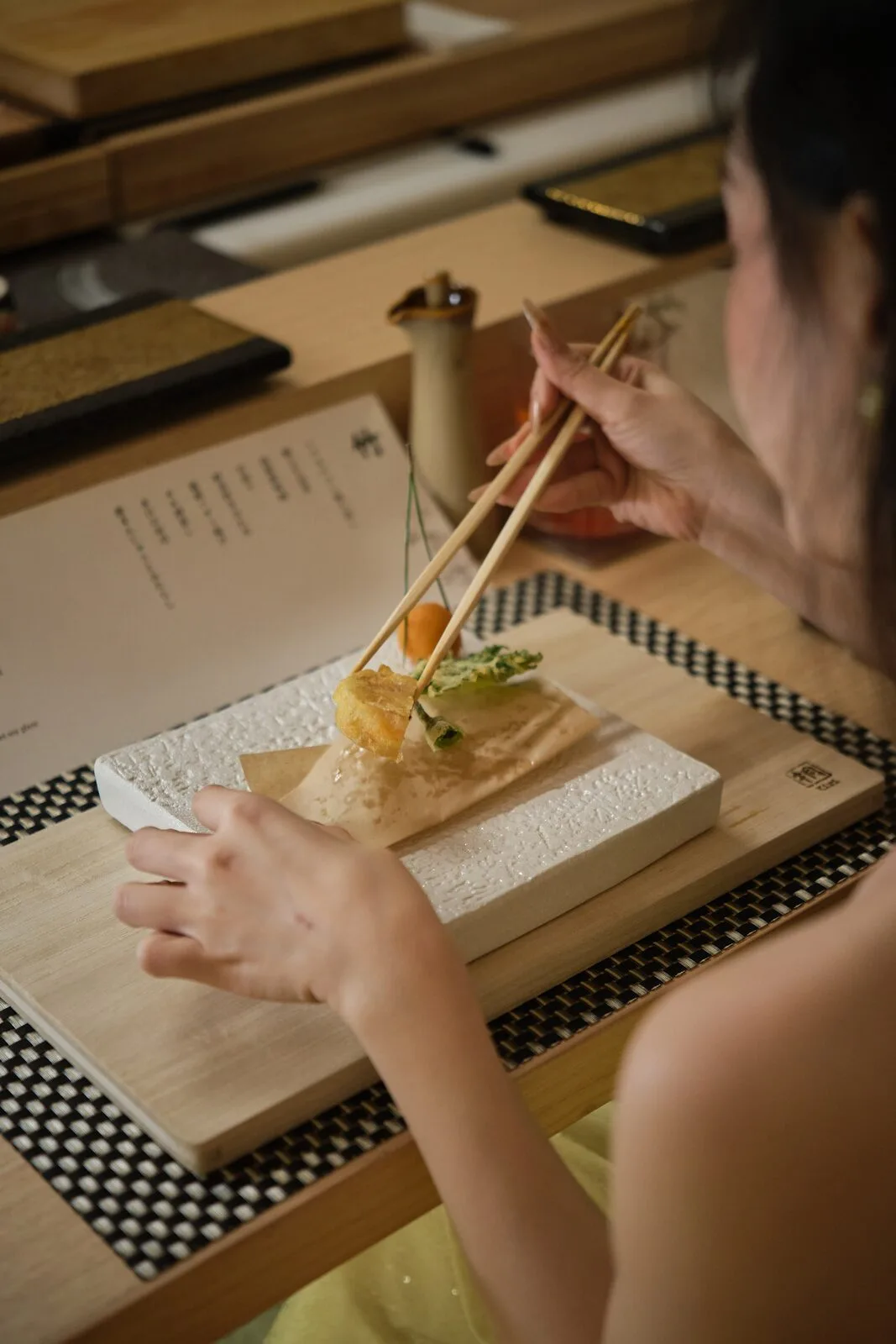
- Seasonal sashimi. The selected fish of that day, enjoyed “bare” to feel the full character of the fish. Depending on the course, this stage may come with tuna cheek or lightly seared bonito (tataki).
- A grilled dish. Grilled shiitake mushroom topped with salmon roe, or salt-grilled ayu – a river fish emblematic of seasonal Japanese cuisine.
- Steamed and fried dishes. Dashi-marinated stuffed eggplant, soybean chawanmushi savory egg custard, corn and scallop kakiage fritters – warm stages that refresh the palate mid-meal.
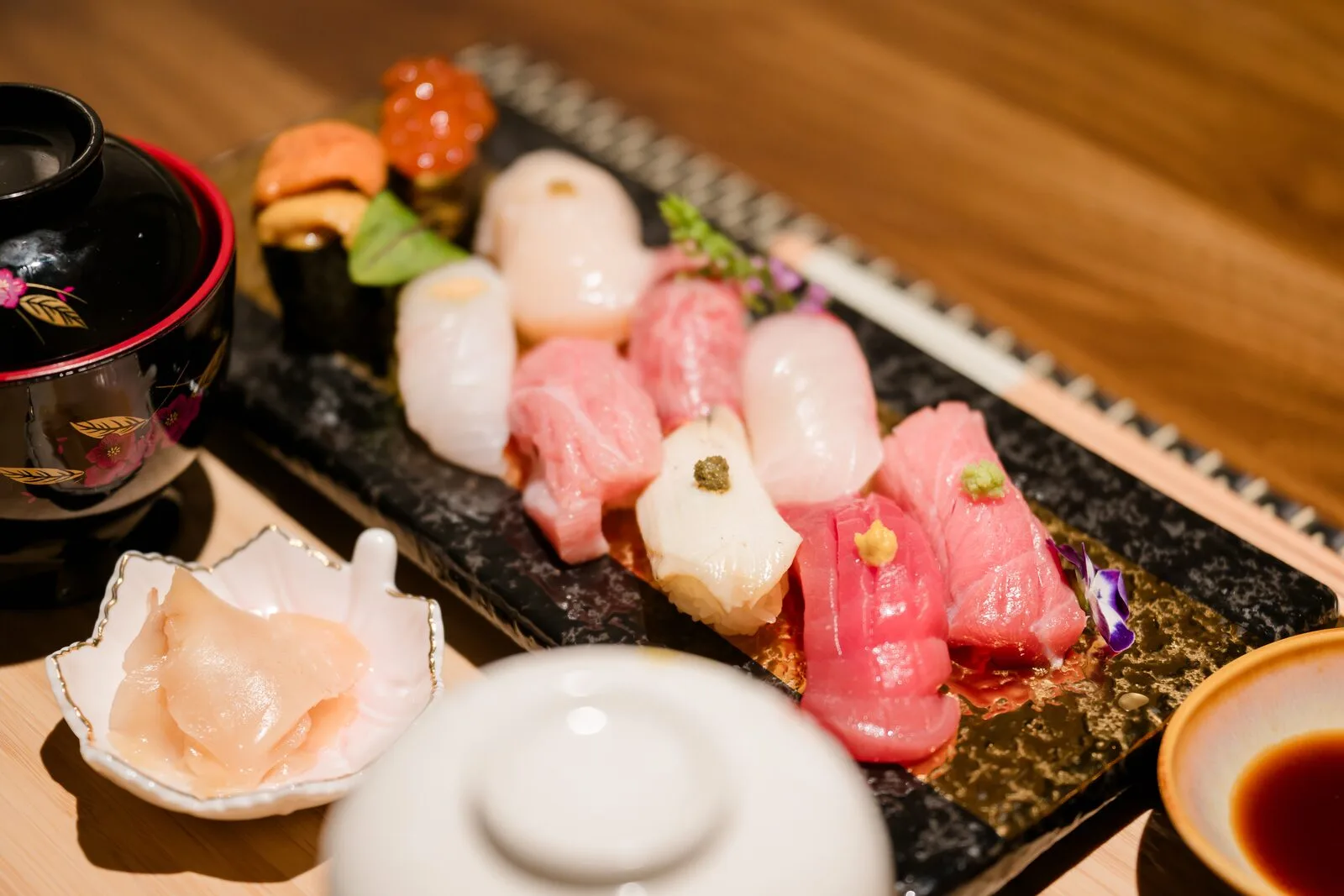
- Sushi of the day. After a light, clear soup, the chef begins the sushi: hand-shaped pieces chosen from the best ingredients of the day. This is where the rice-shaping technique is shown at its clearest.
- Dessert. Soft, cool warabi mochi brings the journey to a close.
The interest lies in how each stage is filled: which fish is in season, what today’s sushi selection includes, and the chef always following the rhythm of your eating so each portion arrives at just the right moment. The restaurant offers courses of varying lengths, so you can choose according to your occasion and the time you have.
What makes an omakase experience trustworthy?
The sushi and sashimi part of an omakase meal has no elaborate sauce to lean on. A piece of nigiri is only rice and fish, so if either one falls short, you notice at once. That very honesty means the quality of an omakase counter cannot rest on luck – it must come from a system run seriously, day after day.
At Sushi Ineya, that system begins with ingredient selection standards: fish and seafood are chosen by season, brought in regularly and inspected before they reach the counter. Next comes the technique for handling the fish – filleting, cutting and ageing it properly so each kind of fish reaches its own depth of flavor – along with the quality of the shari and the careful temperature control of every piece of nigiri, as you saw above. The course sequence is designed with intent, and the service team is trained in how to introduce each dish so you understand what you are enjoying.
Over it all runs the spirit of omotenashi – hospitality that attends to every gesture without display – and the training and quality-control system of Royal Sojitz applied consistently across the whole group. When you “entrust” your dinner, what holds that trust is not only the skill of one chef, but an entire operating standard standing behind the counter.
Sushi Ineya is a dedicated omakase destination within the Royal Sojitz group. The menu is built by season, with hand-shaped sushi in a modern style, served in the spirit of omotenashi – refined hospitality that attends to every gesture without display.
A few small things for a fuller meal
There are no rigid rules at the sushi counter, and Sushi Ineya will always put you at ease, whether you are familiar with omakase or new to it. But there are a few small things that, once you know them, make each bite even better.
Start from the moment a piece of nigiri is set down in front of you. That is also when it is at its best, while the rice is still warm and the fish still cool, so if you want to take a photo, be quick and then taste it right away. You may use your hands or chopsticks, whichever feels most natural to you; sashimi, though, is usually eaten with chopsticks.
Before reaching for the soy sauce, look at the piece of sushi for one more second. If the chef has already finished it with a sauce or seasoning, that piece is meant to be eaten as it is – try it first, then decide whether it needs anything more. As for the slice of pickled ginger beside it, called gari in Japanese, it is not meant to be placed on the sushi: it is a pause between two kinds of fish, helping your palate return to clarity before you move on to the next piece.
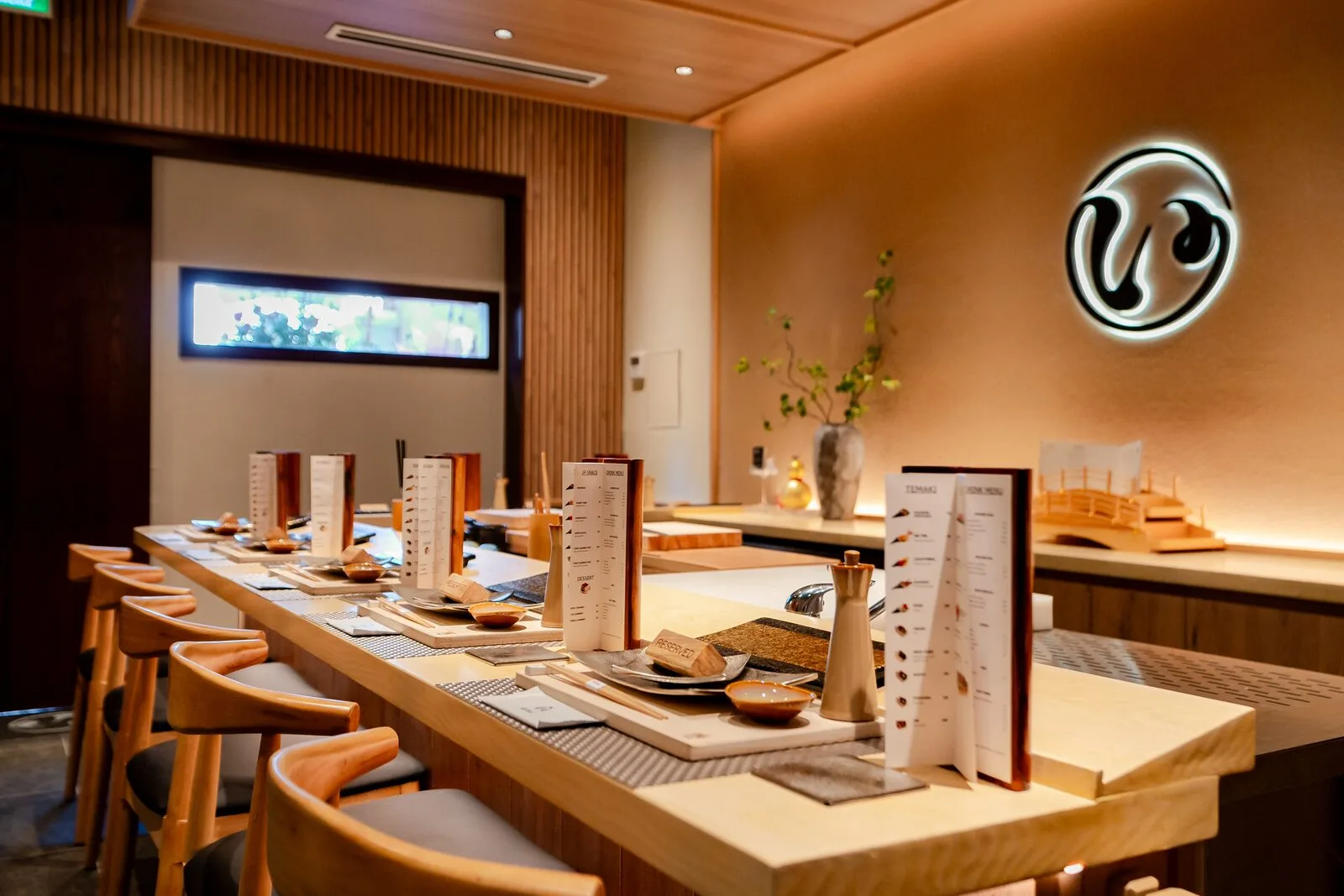
And do not be shy about conversation. Sitting at the counter is a rare privilege – you can ask what fish is in season today, or why this piece was lightly seared on top. That conversation is part of the meal, too.
When to treat yourself to an omakase dinner
Omakase suits those moments when you want the meal itself to become part of the story: an anniversary evening, a business occasion that calls for polish and privacy, a gift for someone dear, or simply when you want to enjoy a culinary journey prepared and led with care from beginning to end.
A well-matched sake can also bring out more of the flavor in each piece of sushi. Depending on your taste and the current drinks list, the Sushi Ineya team can suggest a suitable choice for your meal.
If this is your first omakase experience, keep just three things in mind: book ahead so the restaurant can prepare properly, arrive on time so the course begins in its intended order of service, and let them know in advance of any ingredients you are allergic to or cannot have.
For the rest, keep an open mind. You may meet a fish, a texture or a preparation you have never tried before – and those very discoveries often become the most memorable part of the meal.
Frequently asked questions about omakase
Place your dinner in the right hands
What you place on the counter during an omakase meal is not just the cost of a list of dishes. It is trust – and in return, a journey led through the finest of what that day has to offer. In Saigon, that experience is at its fullest when it is placed at a sushi counter that works to serious standards and to the hospitality of omotenashi.
Discover more of the restaurants in the Royal Sojitz group, or spend an evening at Sushi Ineya to feel for yourself what has brought so many diners back.
Discover more: the sushi-meets-teppanyaki experience at Roll & Teppan Ineya.