
The slice touches the grill and changes colour in seconds. The marbled fat melts before the meat even firms up, leaving a slow, sweet richness in your mouth. You understand why people call this the beef that melts on the tongue – and you start to wonder: what exactly do those two characters, A5, measure?
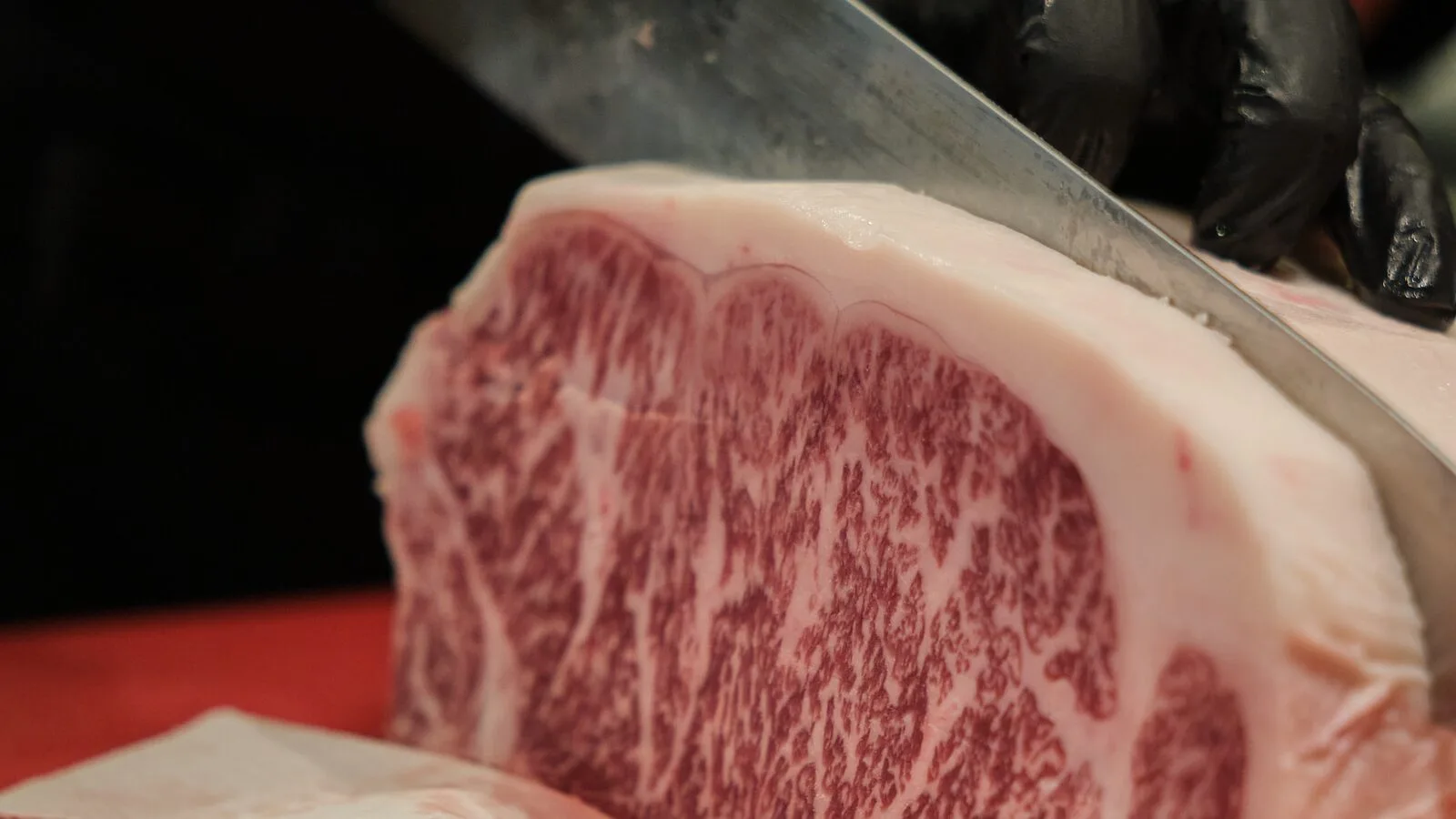
In Saigon, the words “Wagyu A5” appear on more and more menus. But few places explain what they mean, and for the person paying for it, that’s the most worthwhile thing to know. This article decodes how Japanese beef is graded, then points you to a place to try it: Premium Yakiniku Ineya on Pham Viet Chanh.
Wagyu isn’t one breed, but a group
The word wagyu (和牛) joins “wa”, meaning Japan, and “gyu”, meaning cattle. It doesn’t refer to a single breed but is a collective name for four native Japanese breeds, the most common being the Kuroge Washu, the black-haired breed that makes up the bulk of production.
What sets these breeds apart is their ability to store fat woven between the muscle fibres rather than in a layer on the outside. That fine, lacy marbling melts at a temperature lower than the human body’s, creating the melting sensation other beef struggles to match.
What makes Wagyu special isn’t more fat, but fat in the right places.
Reading the grade: the letter and the number tell two different stories
Japanese beef is graded by a single unified system that produces a code of one letter and one number. Many assume it’s a single score; in fact these are two separate scales:
- The letter A, B or C: yield. This is an industry-facing figure, measuring how much usable meat a carcass gives against a standard. A is the highest. It speaks to butchering efficiency more than to flavour.
- The number 1 to 5: meat quality. This is the part diners care about. It’s decided by four factors: marbling, the colour and brightness of the meat, its firmness and texture, and the colour and lustre of the fat. Notably, the final grade is taken from the lowest of the four, not the average. So a 5 demands that all four factors reach the top grade.
- A finer marbling scale. Marbling alone is also scored on its own multi-level scale, so even within grade 5 there are cuts with thicker or thinner marbling.
In other words, A5 is the top of both scales. For the diner, it’s the number 5 that decides the experience on the plate.
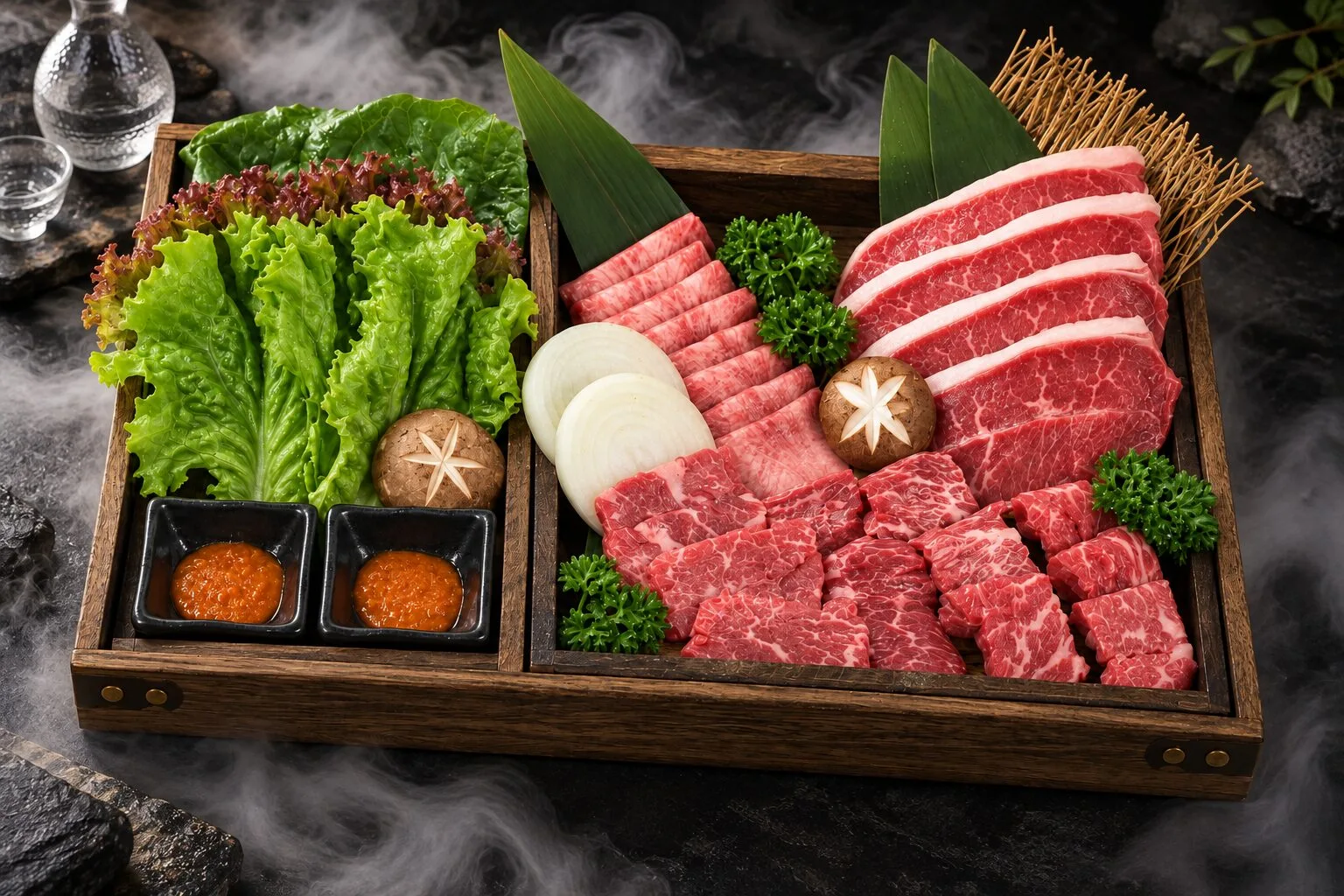
Yakiniku: grilled piece by piece, not by the batch
Great beef still needs to be grilled right. Yakiniku literally means “grilled meat”, but it has its own rhythm: the meat is thinly sliced, grilled a small piece at a time on a grill set into the table, and eaten the moment it’s done.
Heavily marbled meat needs very little time over the flame. Overdo it and the fat renders away into the coals, and the slice loses the very thing that made it valuable. That’s why at serious yakiniku places the staff often guide the timing for each cut, because every part of the animal wants a different approach.
The dipping sauce is part of the design too. A soy-rich tare suits leaner cuts, while fattier ones often need only a little salt and wasabi to keep the sweetness of the fat intact.
One spirit, two ways to enjoy it
The Royal Sojitz group has two yakiniku addresses, and they serve two different needs.
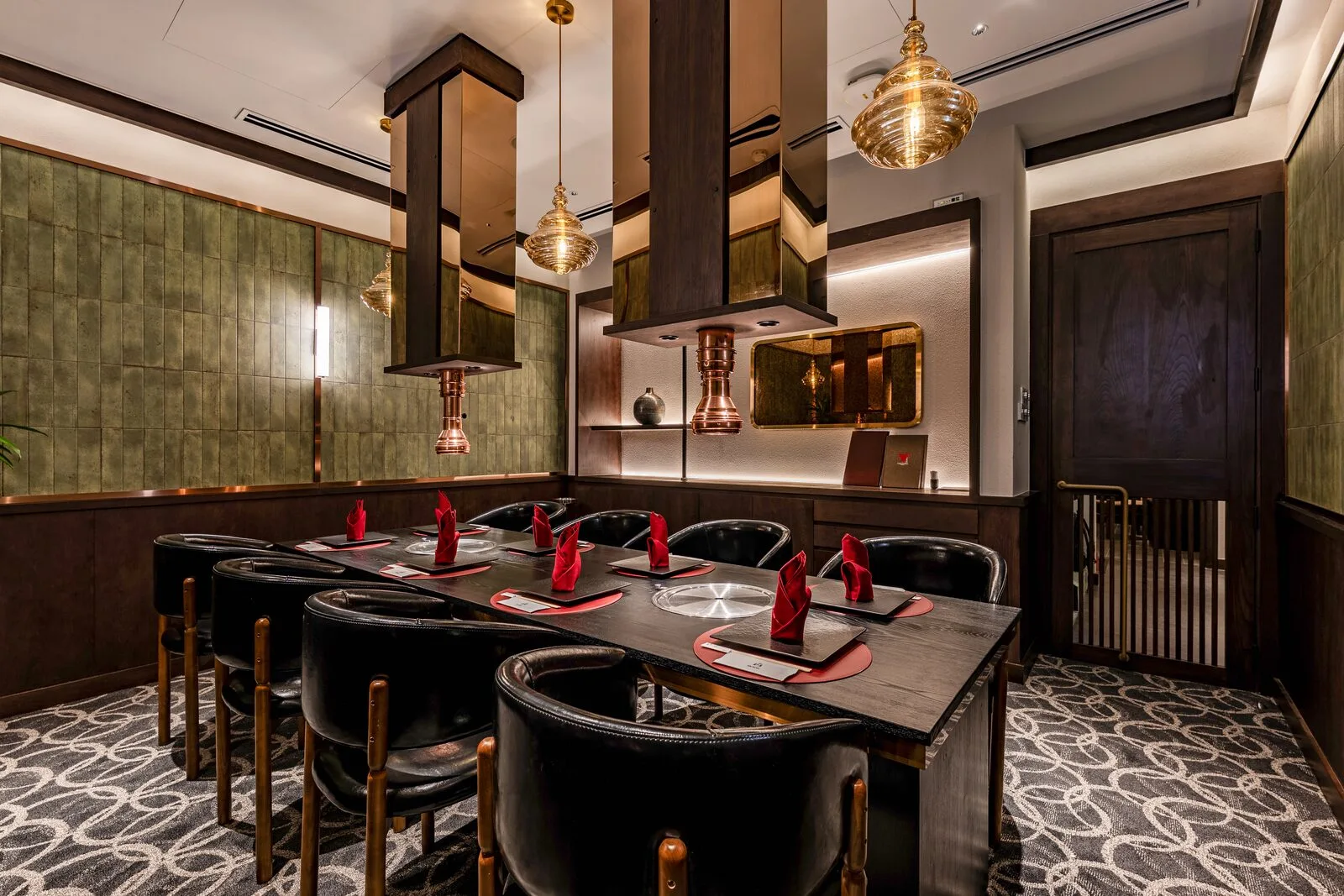
Premium Yakiniku Ineya on Pham Viet Chanh is the upscale version: beef selected by marbling and origin, a private setting, and a team well-versed in each cut to introduce it and guide you on how to grill. This is the place for a dinner that calls for care, for hosting a partner, or for a memorable occasion.
Yakiniku Ineya Ngo Van Nam in District 1 has a more relaxed spirit: you grill at your own table, order at your own pace, ideal for a family dinner, a group of friends after work, or a first try at yakiniku without wanting anything too formal.
Both share the same standard for sourcing and handling. The difference lies in the atmosphere and the level of service, not in the quality of the ingredients.
Premium Yakiniku Ineya is the upscale yakiniku address within the Royal Sojitz group, serving Wagyu and imported cuts selected by marbling, flavour and origin. The menu spans à la carte, lunch sets and courses for a complete dinner.
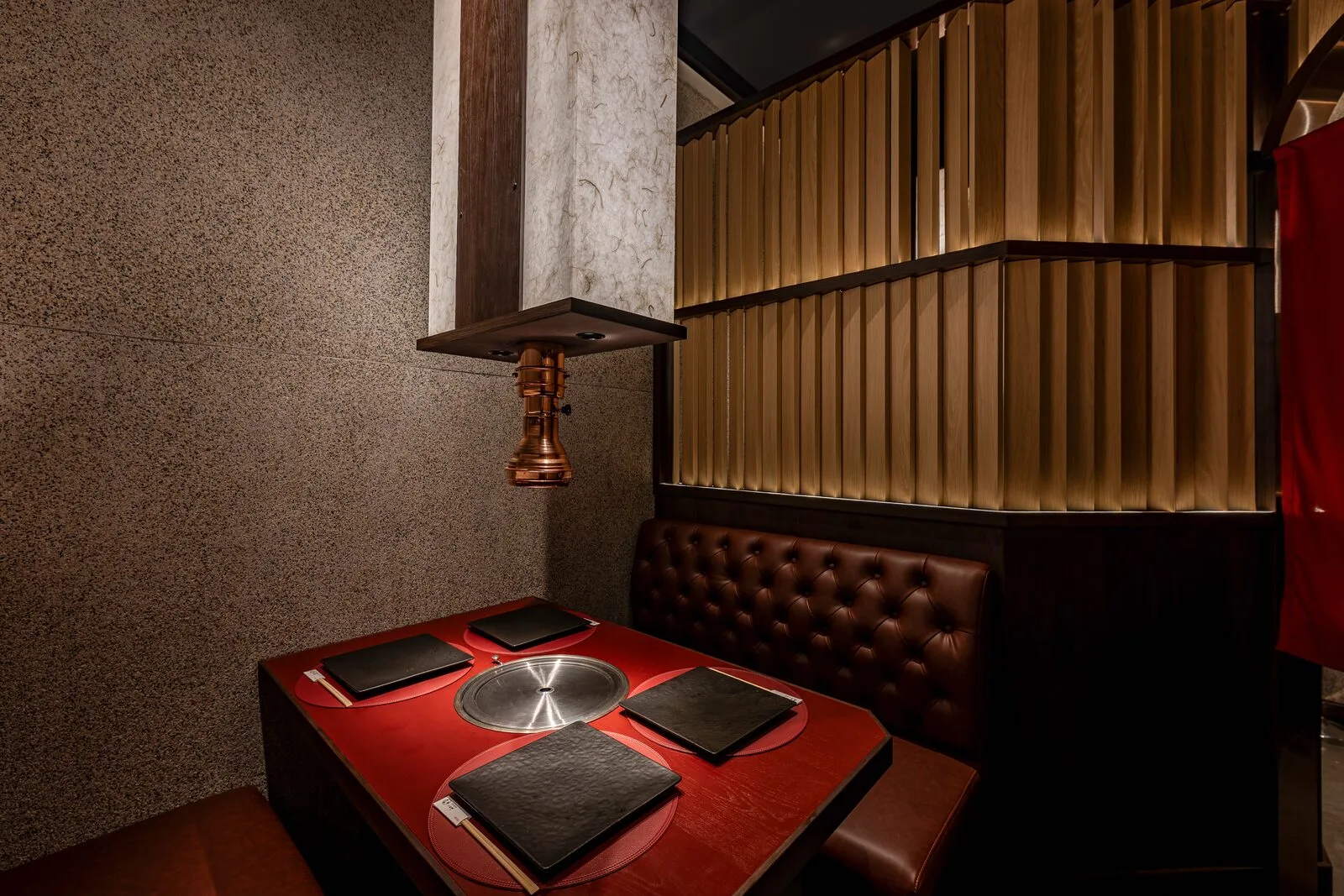
Behind a cut that meets the standard
With yakiniku, most of the work is done before the meat reaches the table. No sauce can save a poorly chosen slice, and no grilling technique can make up for careless storage.
At Premium Yakiniku Ineya, it starts with the selection: each cut chosen by marbling, flavour and origin, rather than lumped into a single grade. Then comes the butchering and slicing, since the thickness of a slice directly decides its grilling time and its texture. Storage temperature is controlled so the fat keeps its suppleness and bright colour.
The rest belongs to the table: the service team is trained to introduce each cut and suggest grilling times, in the spirit of omotenashi familiar across the Royal Sojitz group.
A few small things for a better yakiniku meal
There are no strict rules at the grill, but a few habits help you make the most of the meat in front of you.
Start with the leaner, lighter cuts, then move gradually to the fattier ones. This keeps your palate sharp enough to appreciate the best slices, instead of being overwhelmed from the start.
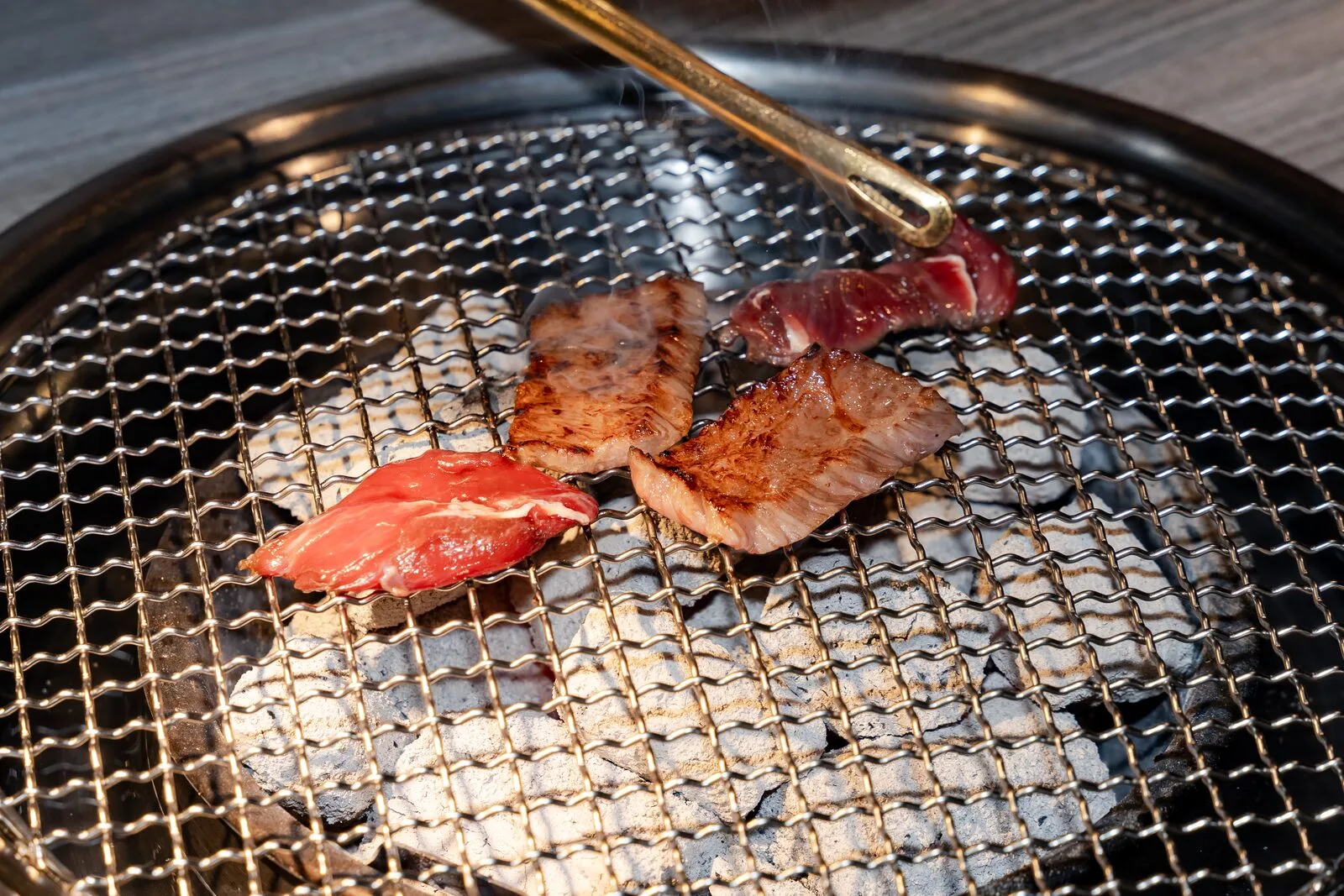
Grill a little at a time; don’t cover the grill. An overcrowded grill drops the heat, and the meat steams in its own moisture rather than searing outside. A few pieces at a time is best.
For heavily marbled cuts, flip once and lift off the moment the surface changes colour. If you’re unsure, ask the staff – they know each cut on the menu better than anyone.
And don’t skip the side dishes. Kimchi, cabbage salad or a light soup between rounds of meat keep the meal balanced and let it last longer.
When to choose a yakiniku dinner
Yakiniku suits tables with a slow rhythm and plenty to talk about. Everyone grills together, waits together, shares the best pieces, so the meal naturally stretches out and opens up.
For hosting a partner or an anniversary, Premium Yakiniku Ineya, with its private setting and attentive service, fits better. For a family dinner or a group of friends who want to do everything themselves, Yakiniku Ineya Ngo Van Nam is the relaxed choice.
For larger groups, book ahead so the restaurant can arrange seating with a suitable grill. If anyone in the group has an allergy or can’t use a certain ingredient, mention it when booking so the restaurant can check what it can accommodate.
Frequently asked questions about Wagyu and yakiniku
Treat yourself to a real beef dinner
Knowing what A5 means won’t make the meat taste better, but it lets you know what you’re enjoying and why it’s cared for so much. The rest is simple: a grill, a few thin slices, and don’t leave them over the flame too long.
Explore more of the restaurants within the Royal Sojitz group, or read the guide to the whole system of Japanese restaurants.
Discover more: teppanyaki grilled right before you at Roll & Teppan Ineya.